Removals in Chichester and West Sussex: Local Costs Guide
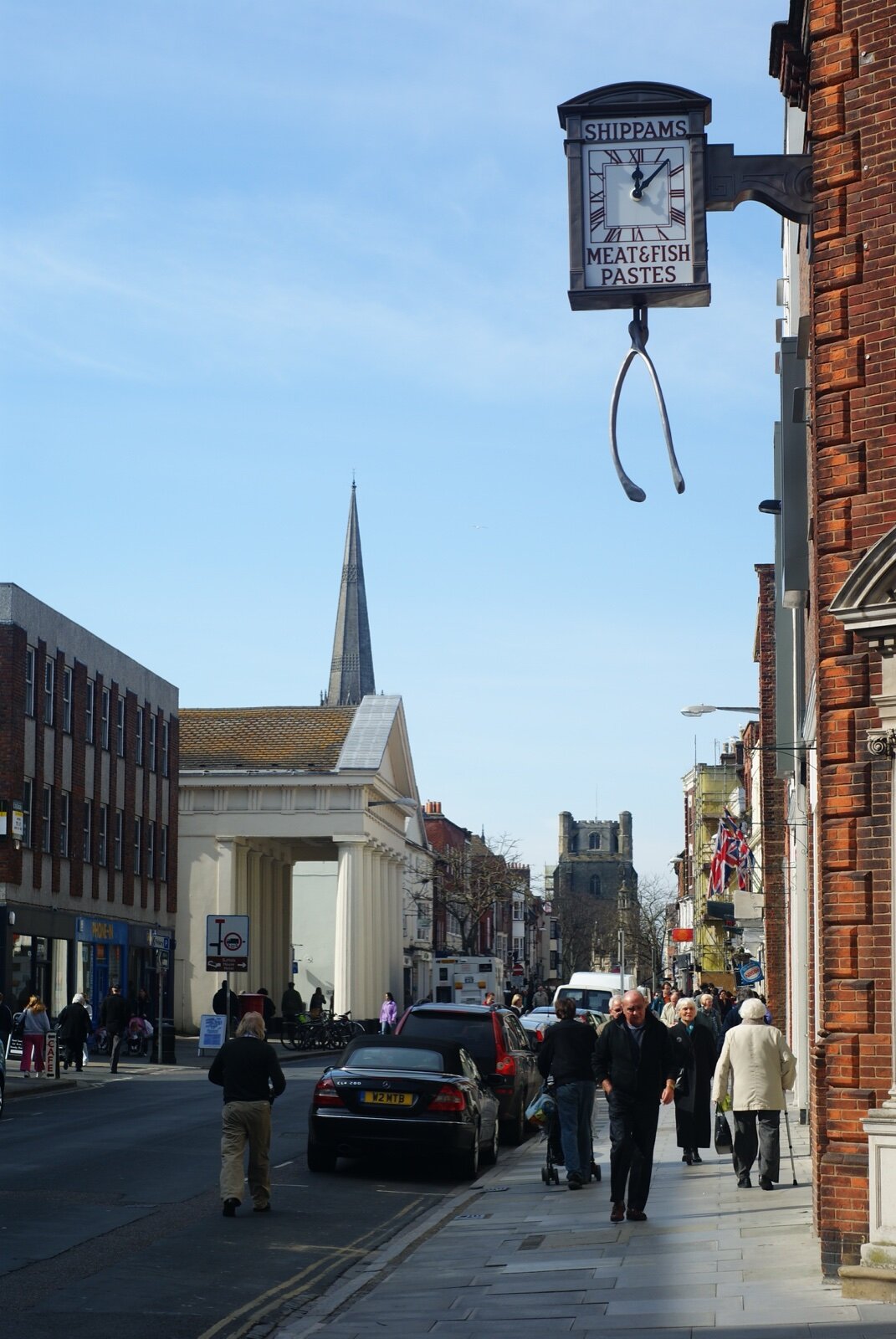
Photo: East Street, Chichester, Sussex - geograph.org.uk - 1760461 by Peter Trimming (CC BY-SA 2.0), via Wikimedia Commons. Shown for context: East Street, Chichester.

Removals in Chichester are priced on the same national logic as anywhere else, then bent by two local facts: a historic city centre where the van often cannot get near the door, and a rural district of narrow lanes running from the Downs down to the Manhood peninsula. Get those two right and a Chichester move costs what a Sussex move should. Get them wrong and you pay for hours of carrying.
This page covers what a local move actually costs here, the parking bay suspension the council will want six days' notice for, and the access traps that turn a straightforward job into an expensive one.
What a Chichester move costs in 2026
The figures below are typical ranges for a local move inside West Sussex, of roughly 10 to 30 miles, with a standard crew who load, transport and unload while you do your own packing.
| Property | Typical local cost (you pack) | With full packing |
|---|---|---|
| 1 to 2 bedroom flat | £450 to £750 | £600 to £1,000 |
| 3 bedroom house | £700 to £1,200 | £950 to £1,600 |
| 4 to 5 bedroom house | £1,100 to £1,900 | £1,500 to £2,600 |
| Short storage between dates | add roughly £50 to £150 per week | |
Those bands match our wider removal costs in Sussex guide, because Chichester is not a price island. What changes locally is how often a job lands at the top of its band rather than the bottom, and that is nearly always about access. For the full picture including stamp duty and conveyancing, see the cost of moving house in Sussex.
The city centre problem: parking, and the six-day rule
Chichester's centre is a Roman street plan wrapped in Georgian frontages. North, East, South and West Street are pedestrianised or heavily restricted through the day, and the streets people actually live on, the Pallants, Little London, St Martin's, Tower Street, are narrow, permit-controlled and busy. A 7.5 tonne Luton cannot simply pull up outside.
The fix is a parking bay suspension. Chichester District Council arranges on-street suspensions on behalf of West Sussex County Council, which is the highway authority, and the rules are worth knowing before you book a firm:
- Six days' notice is required for all non-emergency bay suspensions, so this is a job for the week you exchange, not the week you move.
- One suspension covers two bays, a maximum of ten metres, or about two normal car lengths. A large removal lorry may need more than one.
- You cannot park in it yourself. The council states plainly that a householder arranging a suspension for removals or property work may not use the bay for their own vehicle.
- Anything parked in a notified suspension can be ticketed, which includes a neighbour who did not read the cone notice.
- Suspensions can run for up to three months, useful if you are moving out and in on different dates.
The council's own parking bay suspensions page has the current application route and fees. Ask your removal firm whether they arrange it or expect you to; both are normal, but only one of them is your problem if nobody does it.
Where the money goes on a rural West Sussex move
Outside the city, the district is large and awkward. Firms quote it on time, and time is eaten by three things.
Lanes that will not take a Luton
Villages on the Manhood peninsula, the lanes behind Goodwood, and the Downs villages towards Midhurst and Petworth can defeat a full-size vehicle. When they do, the crew shuttles with a smaller van, handling every item twice. That can add hours to a day. Say so at survey stage and the firm brings the right vehicle rather than discovering the problem at 8am.
Long carries and long drives
A detached house set back behind a gravel drive is a long carry with every load, and a gated entrance with a weight limit is a shuttle by another name. Neither is a reason to pay more than you should, but both are a reason to be quoted accurately.
Period property and listed buildings
Chichester and the surrounding villages have a lot of period stock. Narrow doorways, tight winder staircases and low beams mean wardrobes and sofas get dismantled or hoisted rather than carried. Dismantling and rebuilding is often charged separately, so confirm what is inside the quote.
Getting an accurate quote here
A price given over the phone without a survey is an estimate, and estimates grow. For anything above a small flat, insist on a proper survey, either an in-home visit or a video walkthrough on your phone, and get three quotes against the same brief. Show the surveyor the loft, the garage, the shed and the garden furniture, because volume is what you are actually paying for.
Check that the firm carries goods-in-transit and public liability cover, and read what the cover actually applies to: most firms only insure boxes they packed themselves, which is the trade-off for packing your own. Membership of the British Association of Removers is a reasonable filter, not a guarantee, and our guide to choosing a removal company in Sussex covers what else to ask.
Moving to Chichester rather than within it
If you are arriving from London or Surrey rather than moving down the road, get quotes from firms at both ends of the journey; the one based nearest the loading address usually prices the crew hours better. It is also worth timing the move away from a Friday and away from month end, which is the single easiest saving on the whole job. Once you are in, our guide to what to do in Chichester is a reasonable first weekend, and the rest of Move Sussex covers the county.
Frequently asked questions
How much do removals cost in Chichester?
For a local move inside West Sussex, budget roughly £450 to £750 for a one or two bedroom flat, £700 to £1,200 for a three bedroom house and £1,100 to £1,900 for a four or five bedroom house, all on a you-pack basis. A full packing service typically adds £250 to £600 depending on how much is fragile. Chichester itself sits in the middle of the Sussex range, but city centre and rural lane addresses often add a long carry or a shuttle, which is charged as time.
Do I need to suspend a parking bay for a removal in Chichester?
If the only place to load is an on-street bay, yes. Chichester District Council arranges on-street bay suspensions on behalf of West Sussex County Council, and it needs six days' notice for anything that is not an emergency. One suspension covers the length of two bays, up to a maximum of ten metres. Suspensions can be arranged for up to three months, which matters if you are moving in stages.
Can I park my own car in the bay I have suspended?
No. The suspension is for the removal vehicle, not for you. Chichester District Council is explicit that a householder arranging a suspension for removals or building work may not use the bay for their own car, and any vehicle parked inside a notified suspension can be issued with a penalty charge notice. Move your own car out the night before.
How far in advance should I book a removal firm in Chichester?
Four to six weeks for a normal date, and longer if you are completing at the end of a month, on a Friday, or in the July to September peak when the school year turns over. Chichester has a limited number of firms with crews big enough for a large detached house, so the good dates go early. You can hold a provisional date and confirm it once the chain firms up.
Is a Chichester to London move much more expensive?
Yes, though less than people expect. A local Sussex move is priced mostly on crew time; once you go long distance, mileage and driver hours start to count, commonly in the region of £1 to £2.50 per mile on top of the base job. From Chichester you are looking at roughly 65 miles to central London, so a three bedroom move usually carries a few hundred pounds more than the same job within the county.
What makes rural West Sussex moves cost more?
Access, almost always. Single-track lanes around the Manhood peninsula, Goodwood and the South Downs villages can stop a full-size Luton getting to the door, which forces a shuttle with a smaller van and doubles the handling. Long gravel drives, gated entrances with a weight limit and thatched or listed cottages with narrow doorways all add time. Tell the surveyor before they quote, not on the day.