Moving House Timeline and Checklist for a Sussex Move (8-Week Plan)

A house move feels overwhelming because everything seems to land at once. It does not have to. Break the run-up into weeks, give each one a short job list, and most of the panic disappears. This is a week-by-week countdown for a Sussex move, starting roughly eight weeks before completion and running through to the day you pick up the keys. It folds in the local details that catch people out here, from narrow lanes and seafront parking zones to school transfers across two county councils, so you are not improvising on the day.
One honest caveat before the countdown. If your purchase is in a chain, you will not have a confirmed completion date until exchange of contracts, which can land only a week or two before you move. Most chains allow one to two weeks between exchange and completion, so treat the early weeks as preparation you can do without a fixed date, and the final fortnight as the part that fires once exchange happens. Build the list, then slot the dates in when you have them.
Weeks 8 to 7: groundwork before exchange
This is the quiet phase, and the best time to do the thinking that saves money later. Start by working out roughly what the whole move will cost, because that shapes every choice that follows. Our cost of moving house in Sussex guide breaks down removals, conveyancing, surveys and the rest, and the budget calculator in our tools section gives you a starting range to plan against.
- Set a rough moving budget and a target date window, even if the exact day is not fixed yet.
- Declutter room by room. You pay to move volume, and Sussex lofts, garages and garden sheds hold a surprising amount. A charity run or a tip trip now shrinks the van you will need.
- Start gathering quotes from removals firms. You do not need a confirmed date to get a survey done and a written quote in hand.
- If you have school-age children, look up the admissions process for your destination council early. East Sussex County Council, West Sussex County Council and Brighton & Hove City Council each run their own in-year admissions for a move during the school year, and places at popular schools go quickly.
Weeks 6 to 5: book removals and confirm the professionals
Book your removals company four to six weeks ahead as a working minimum. That window lets you compare three quotes properly and still secure the slot you want. Friday and month-end dates fill first, and summer is the peak season across the coastal towns, so for a July or August move closer to six to eight weeks is safer. Our full guide on how to choose a removals company in Sussex covers credentials, insurance and reading quotes line by line.
- Choose and book your removals firm, or provisionally hold a date if you are waiting on exchange.
- Tell the surveyor about access at both ends: narrow lanes in the older parts of Lewes, Rye and Arundel, seafront flats with stairs in Hove or Eastbourne, and rural drives on the South Downs a large van cannot reach.
- Confirm your conveyancer or solicitor has everything they need, and chase any outstanding searches.
- Arrange buildings insurance so it is ready to start from exchange, which is when the risk passes to you as the buyer.
- Submit your in-year school application if you are moving mid-year, and request your children's records be transferred.
Weeks 4 to 3: notify, redirect and plan the logistics
Now you start telling the world you are moving. The list of people to notify is longer than most expect, so work through it methodically rather than from memory on moving day.
- Set up Royal Mail redirection, which can take a few working days to start, so do not leave it to the last minute.
- Notify your bank, employer, GP and dentist, the DVLA for your driving licence and vehicle log book, your TV licence, and any insurers and subscriptions.
- Tell your current council you are leaving and register with the new one for council tax. Confirm which authority you are moving into, because Sussex is split between East Sussex, West Sussex and the unitary Brighton & Hove, and your council tax band and bill follow the property.
- Contact your energy, water, broadband and phone providers to arrange switches or transfers for the move date. Broadband in particular can take a week or two to activate at the new address, so book it early.
- Start collecting packing materials and begin boxing up anything you rarely use: books, out-of-season clothes, the spare room.
Weeks 2 to 1: exchange, parking permits and serious packing
Once you exchange contracts, the date is real and the final sprint begins. This is also the moment to sort the Sussex-specific logistics that a removals crew cannot fix for you on the day.
- Confirm the booking with your removals firm now that the completion date is fixed.
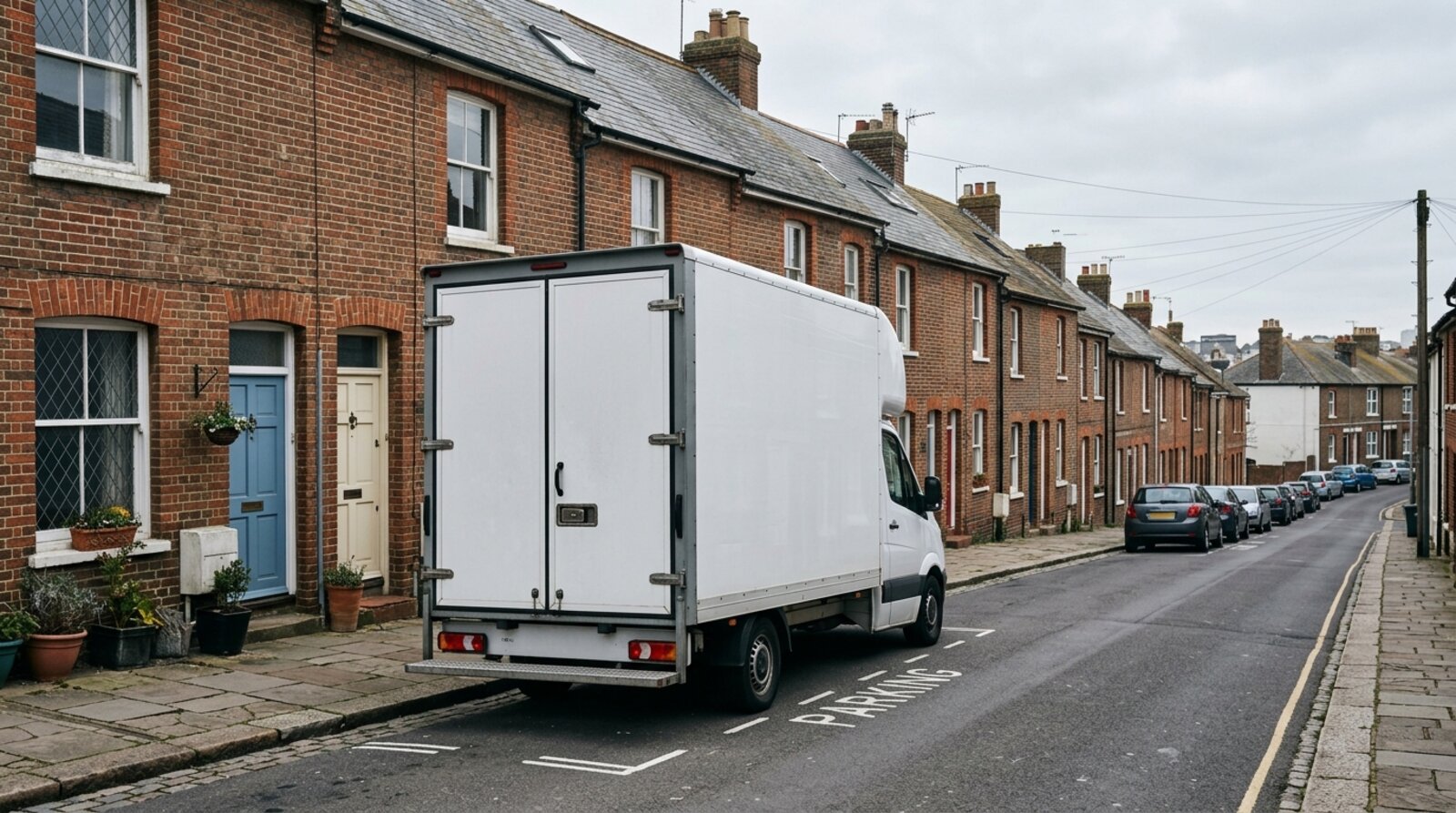
- Sort parking at both ends. Many Sussex streets sit in controlled parking zones, and a van that cannot stop near the door means a long, slow carry. In Brighton & Hove you apply to the council for a parking bay suspension for the removal vehicle, and the council asks for seven full working days' notice for a standard application, with requests in by 2pm to count from that day. Lewes, Chichester and other controlled zones have their own arrangements, so check with the relevant council in good time rather than the night before.
- Pack in earnest, labelling every box by room and marking the fragile and essential ones clearly.
- Take meter readings at both properties on the day, and photograph them. Tell your utility providers the readings and the move date.
- Arrange care for pets and young children on moving day if you can, so they are out from underfoot.
- Confirm school start dates and the new route, especially if the move crosses from an East Sussex to a West Sussex authority where term dates and transport can differ.
Moving week and moving day
By the final few days the heavy lifting of planning is done and you are into execution. Keep an essentials box with you rather than on the van: kettle, mugs, tea, phone chargers, medication, a few tools, toilet roll, and a change of clothes. Pack a separate bag for important documents so they never go missing in the load.
On the day itself, be ready before the crew arrives, walk them through what goes and what stays, and keep the access route and any suspended parking bay clear. Take final meter readings, do a last sweep of every room, loft and cupboard, and leave keys and any manuals or warranties for the people moving in behind you. When you reach the new place, check the property against the inventory if you rented, locate the stopcock and the fuse box, and prioritise unpacking the kitchen and beds so the first night is bearable. The rest can wait.
Printable final-week checklist
Run through this in the last seven days:
- Removals booking confirmed, with arrival time and the access plan agreed.
- Parking bay suspension or permit arranged at both ends where the street is controlled.
- Royal Mail redirection active, and key contacts told your new address.
- Council tax closed at the old address and opened at the new authority.
- Energy, water, broadband and phone switches booked for the move date.
- Boxes labelled by room, fragile items marked, essentials box and document bag set aside.
- Meter readings ready to take and photograph at both properties.
- School transfer confirmed and the new route checked.
- Pets and children sorted for the day, and a list of phone numbers to hand.
Moving-day checklist
- Up early, dressed, and ready before the crew arrives.
- Brief the removals team on what moves, what stays, and the route in and out.
- Suspended parking bay or driveway kept clear for the van.
- Final meter readings taken and photographed at the old home.
- Last sweep of every room, loft, garage, shed and garden.
- Keys, manuals and warranties left for the new owners or tenants.
- Essentials box and documents travelling with you, not on the van.
- At the new home: find the stopcock, fuse box and meters, then unpack the kitchen and beds first.
Putting the plan to work
An eight-week countdown turns a daunting move into a series of small, manageable jobs. The two pieces people most often leave too late are booking removals and sorting parking in a controlled zone, so pull those forward and the rest tends to follow. Cost the move first so your decisions are grounded, book the van early, and handle the Sussex logistics that no one else will handle for you.
To pin down the numbers before you commit, our cost of moving house in Sussex guide and the budget calculator in the tools section give you a working figure. For the firm itself, read how to choose a removals company in Sussex, and if you are still settling on where to land, our estate agents directory covers East and West Sussex while our guide to moving to and living in Sussex sets the wider picture.
Frequently asked questions
How far ahead should I start planning a house move in Sussex?
Around eight weeks gives you a comfortable run, though you can do plenty earlier. Use the first few weeks for groundwork you can do without a fixed date: setting a budget, decluttering, gathering removals quotes and checking school admissions. If you are in a chain you will not get a confirmed completion date until exchange of contracts, usually one to two weeks before the move, so treat the final fortnight as the part that fires once exchange happens.
Do I need a parking permit for a removals van in Sussex?
On many Sussex streets in controlled parking zones, yes. In Brighton & Hove you apply to the council for a parking bay suspension for the removal vehicle, and the council asks for seven full working days' notice for a standard application, with requests received by 2pm to be dated that day. Lewes, Chichester and other controlled zones have their own arrangements, so check with the relevant council well in advance rather than on the day.
When should I book a removals company in the countdown?
Around weeks six to five before the move, which is four to six weeks ahead as a working minimum. That gives you time to compare three written quotes and still secure your slot. Friday and month-end dates fill first, and summer is the busiest season in the coastal towns, so for a July or August move book closer to six to eight weeks ahead.
How do I switch council tax when moving within Sussex?
Tell your current council you are leaving and register with the council for your new address. Sussex is split between East Sussex County Council areas, West Sussex County Council areas, and the unitary Brighton & Hove City Council, so confirm which authority your new home falls under. Council tax follows the property, so your band and bill are set by where you move to, not where you came from.
How do I transfer my child's school place when moving across Sussex?
Apply through the in-year admissions process run by the council for your new area. East Sussex County Council, West Sussex County Council and Brighton & Hove City Council each handle their own admissions, so a move that crosses from one authority to another means applying to the new one. Start early, because places at popular schools fill quickly, and ask both schools to transfer your child's records.
What should I keep with me rather than load on the van?
Pack an essentials box and a document bag that travel with you: kettle, mugs, tea, phone chargers, medication, a few tools, toilet roll and a change of clothes, plus passports, contracts and warranties. Take and photograph meter readings at both properties on the day, and keep a list of phone numbers handy in case anything needs chasing.