Best Commuter Towns in Sussex for London Workers: Train Times, Prices and the Real Door-to-Door Reality
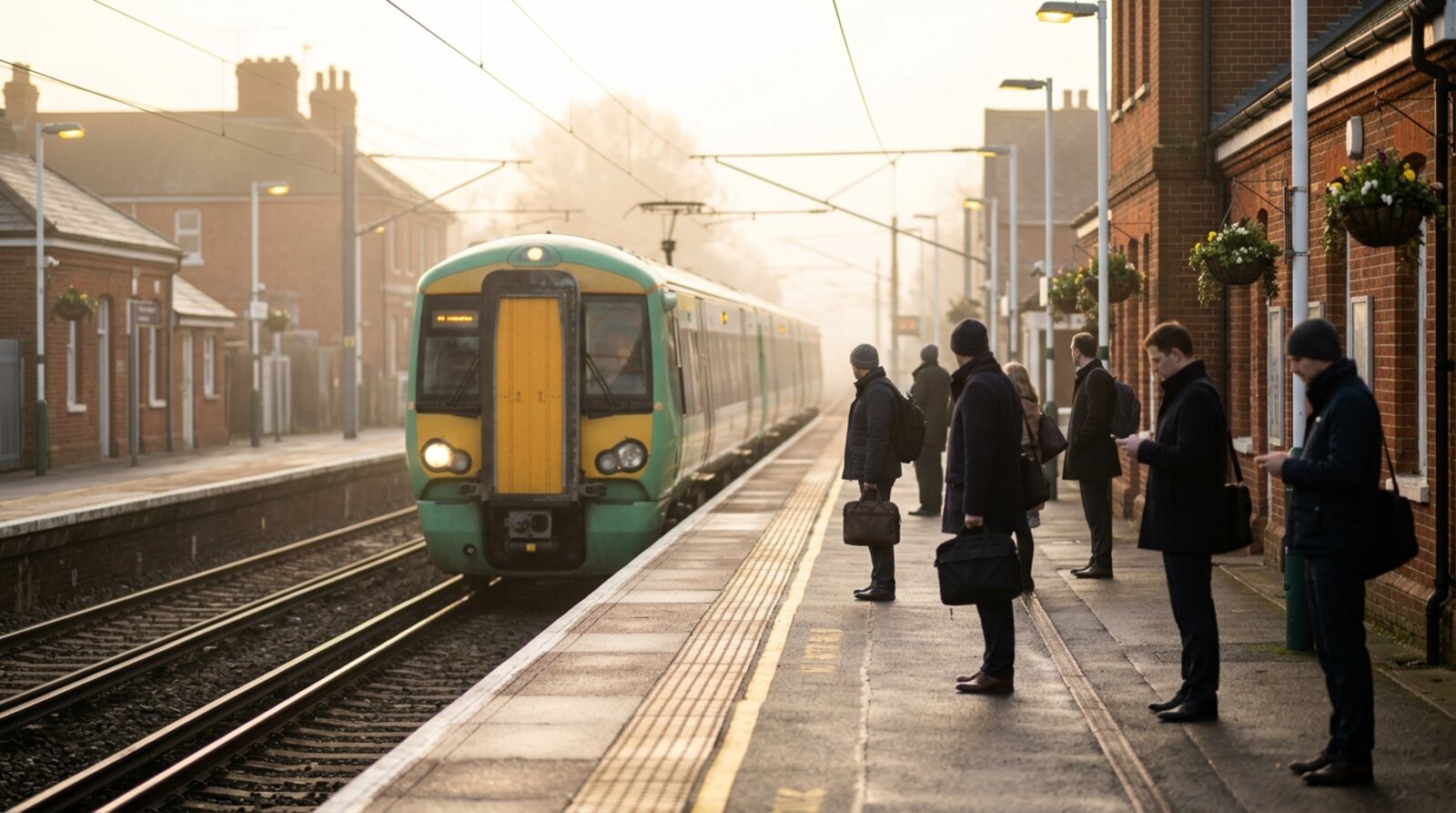
If you work in London and you are eyeing a move to Sussex, the headline train time is the figure everyone quotes and the one most likely to mislead you. A 45 minute service to Victoria means very little if you spend 15 minutes driving to the station, 10 minutes parking, and another 25 minutes on the Tube at the London end. This guide compares the main Sussex commuter towns on direct train times, the door-to-door reality, season-ticket cost and typical house prices, so you can shortlist somewhere that fits your actual working day rather than the timetable's best case.
How to read a Sussex commute properly
Three numbers decide whether a town works for you, and only one of them appears on the timetable. The first is the fastest direct service to a central London terminus. The second is the realistic door-to-door time, which adds your walk or drive to the local station, the wait, the train, and your onward journey from Victoria or London Bridge. The third is frequency, because a 50 minute train that runs four times an hour beats a 45 minute train that runs once. A late meeting matters far less when the next train is 12 minutes away.
The fast towns on the Brighton main line, Haywards Heath, Burgess Hill, Three Bridges and Brighton itself, share one big advantage: trains run through London Bridge, Blackfriars, City Thameslink and St Pancras as well as Victoria, so you can often reach your office without changing onto the Underground at all. The branch-line towns, East Grinstead among them, trade a little speed for quieter platforms and lower fares. Keep those trade-offs in mind as you read the table below.
The comparison table
The figures below are typical fastest direct journey times to a central London terminus, alongside the overall average property price reported by Rightmove in mid-2026 and the broad season-ticket band for an annual ticket into London Terminals. Train times are fastest direct services; your everyday off-peak service is usually a few minutes slower. Treat these as a shortlisting tool, then confirm your own numbers with the National Rail season-ticket calculator and current asking prices.
| Town | Fastest direct to London | Main terminus | Avg house price | Annual season ticket (approx) |
|---|---|---|---|---|
| Three Bridges (Crawley) | ~32 to 34 min | London Bridge / Victoria | £355,000 | £5,000 to £5,200 |
| Haywards Heath | ~43 min | Victoria / London Bridge / St Pancras | £450,840 | £4,700 to £4,900 |
| Burgess Hill | ~50 min | London Bridge / St Pancras | £414,672 | £4,400 to £4,800 |
| East Grinstead | ~51 min | London Bridge | £463,000 | £4,400 to £4,700 |
| Horsham | ~54 min | Victoria / London Bridge | £436,443 | £5,000 to £5,300 |
| Brighton | ~52 to 60 min | Victoria / London Bridge / St Pancras | £477,000 | £5,200 to £5,500 |
| Worthing | ~1h 23m | Victoria | £382,785 | £5,300 to £5,600 |
One pattern jumps out: the cheapest house prices and the longest commutes do not always line up. Crawley is the cheapest and one of the fastest, but it is a built-up new town rather than a market town. Worthing is on the coast and reasonably priced, but the commute is the longest here by a clear margin. The towns most people end up shortlisting, Haywards Heath and Burgess Hill, sit in the middle on price and near the top on speed, which is exactly why they are popular.
The door-to-door reality nobody quotes
Add a realistic 20 to 35 minutes to every figure in that table and you have your true commute. Say you take the fast 43 minute service from Haywards Heath to Victoria. A 10 minute walk or short drive to the station, a few minutes' wait, then 15 to 20 minutes on the Victoria line or a bus to your office, and you are at roughly 75 to 80 minutes each way. That is the number to compare against your current London commute, not the 43.
The London terminus you arrive at changes this more than the Sussex end does. If your office is near the City, a Thameslink service through London Bridge, Blackfriars or City Thameslink can save you a Tube change entirely, which is why Burgess Hill or Haywards Heath can beat a nominally faster town for a City worker. If you are heading to Victoria, Pimlico or the West End, the Victoria and Gatwick Express pattern suits you better. Work out which terminus serves your office first, then choose the town that runs fast trains there.
Who each town suits
Haywards Heath: the default fast pick
Haywards Heath is the town most London leavers shortlist first, and the train is the reason. Fast services reach Victoria in around 43 minutes and also run to London Bridge, Blackfriars and St Pancras, so it works whichever side of the river your office sits. It is a comfortable, slightly buttoned-up commuter town with good schools and a strong family draw, which keeps prices up at around £450,000. If you want the shortest reliable commute without moving all the way to the coast, this is the safe answer.
Burgess Hill: the value version of Haywards Heath
One stop down the line, Burgess Hill gives you most of Haywards Heath's connectivity for noticeably less money, with an average closer to £414,000. Fast trains reach London Bridge in around 50 minutes. The town is more workaday than its neighbour and has been through years of new-build expansion, which is part of why it is cheaper. For a City commuter who wants Thameslink access and a bigger house for the budget, it is the sharper-value choice.
Crawley and Three Bridges: fastest and cheapest, least picturesque
Three Bridges, the main fast station for Crawley, has the quickest commute in this guide, with services into London Bridge in the low to mid thirties of minutes and frequent trains through the day. Crawley also has the lowest average price here at around £355,000, plus Gatwick on the doorstep, which suits anyone who flies for work. The trade-off is character: Crawley is a post-war new town, not a Sussex market town, so people drawn to period streets and a high street with independents tend to look elsewhere. If commute speed and price are your top two filters, it is hard to beat.
Horsham: the West Sussex market town
Horsham gives you the proper market-town experience, a handsome centre, the Carfax, good independent shops and restaurants, with fast trains to Victoria in around 54 minutes. Prices sit near £436,000, a little below Haywards Heath. It leans corporate and well-to-do West Sussex, popular with professional families who want town amenities and countryside within reach. The commute is a little longer than the Brighton main-line towns, which is the price of the lifestyle.
East Grinstead: quieter, semi-rural, branch-line trade-off
East Grinstead sits at the end of a branch line, with trains to London Bridge in around 51 minutes but running less frequently than the main-line towns, so timing your day matters more. In return you get a semi-rural feel, period housing and easy access to Ashdown Forest. Average prices are the highest in this group at around £463,000, reflecting the larger detached stock. It suits buyers who value greenery and a slower pace over turn-up-and-go train frequency.
Brighton and Worthing: coast first, commute second
Brighton is the only genuine city here and the cultural heavyweight, creative, busy and walkable, with fast trains to Victoria, London Bridge and St Pancras in around 52 to 60 minutes. You pay for it: the average price is the highest on the coast at roughly £477,000. Worthing, just along the shore, is markedly cheaper at around £383,000 and has quietly become more interesting in recent years, but the commute is the longest in this guide at well over an hour and 20 minutes to Victoria. Both suit people who want the sea and a vibrant town more than they want a short commute, and who can use the train time productively or work from home a couple of days a week.
Corporate West Sussex or creative East Sussex?
A rough split helps when you are narrowing the list. The West Sussex commuter belt, Horsham, Crawley, Haywards Heath, Burgess Hill, tends to feel corporate and family-led: good schools, newer housing alongside older stock, professional households, Gatwick and the M23 close by. The East Sussex side, anchored by Brighton and reaching up toward East Grinstead and Ashdown Forest, leans more creative, independent and lifestyle-driven, with older property and a stronger arts and food scene.
Neither is better; they attract different people. If your priorities are the shortest reliable commute, schools and resale stability, the West Sussex main-line towns are the natural fit. If you want character, the coast or the forest and you are willing to trade a few minutes on the train for it, East Sussex and Brighton pull harder. Most buyers know within a weekend of visiting which side of that line they belong on.
South Downs and coast: the lifestyle dividend
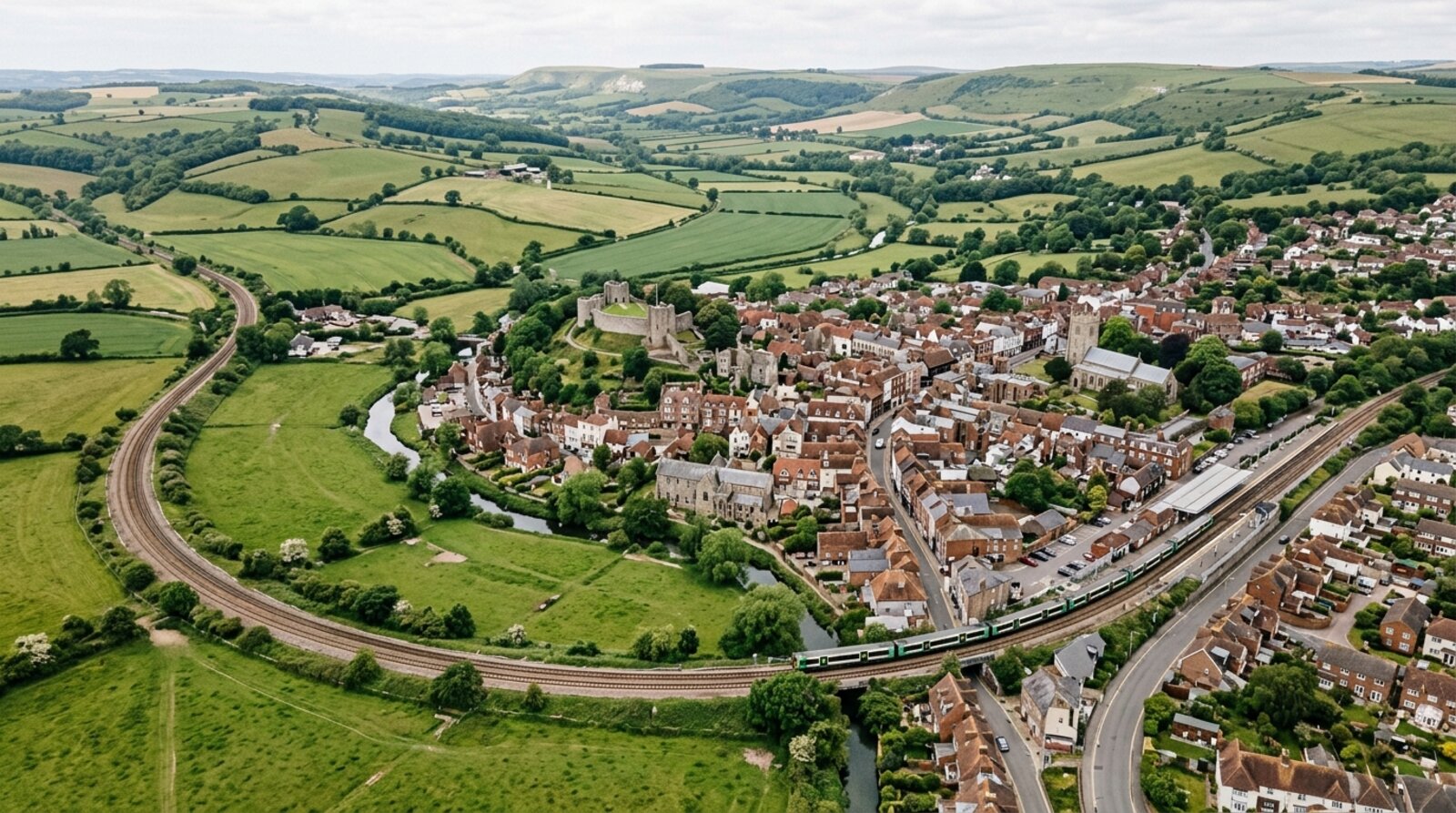
The reason people accept a longer day at all is what sits outside the front door. The South Downs National Park runs right across the county, so Haywards Heath, Burgess Hill, Horsham and East Grinstead all put open chalk hills, the Downs Link and miles of walking within a short drive. Brighton and Worthing add the sea, with the seafront, the South Downs behind, and Devil's Dyke a few minutes inland. That access to green and blue space is the dividend the commute buys, and it is worth weighing as seriously as the train time when you compare a Sussex town against staying in London.
How to shortlist in one afternoon
Pick your London terminus based on your office, then keep only the towns that run fast direct trains there. Rank those by realistic door-to-door time, adding 20 to 35 minutes to the headline figure for both ends. Cross-check each remaining town against your budget using current asking prices, not the averages here, since street and property type move the number a lot. Finally, visit on a normal weekday morning, do the actual station walk, and catch a peak train if you can. The timetable tells you the best case; the platform at 8am tells you the truth.
Once you have a shortlist, the practical side of the move comes next. If you want to weigh the full financial picture before committing, read our companion guide, Cost of Living: London vs Sussex Compared, which sets the season-ticket and house-price figures here against what you actually save by leaving the capital. And our guide to the cost of moving house in Sussex breaks down removals, conveyancing and stamp duty so you can budget the move itself. For everything else about settling in, the Move Sussex homepage covers towns, lifestyle and local context across the county.
Frequently asked questions
What is the best Sussex commuter town for London?
For most London workers, Haywards Heath is the strongest all-round choice: fast direct trains reach Victoria in around 43 minutes and also serve London Bridge, Blackfriars and St Pancras, so it works whichever side of the river your office is on. Burgess Hill, one stop down the line, offers similar connectivity for lower house prices, while Three Bridges near Crawley has the quickest commute of all. The right answer depends on your London terminus, your budget and whether you want a market town or the coast.
Which Sussex town has the fastest train to London?
Three Bridges, the main fast station serving Crawley, has the quickest commute in this guide, with fast services into London Bridge in the low to mid thirties of minutes and frequent trains throughout the day. Haywards Heath is next at around 43 minutes to Victoria. Crawley is also the most affordable town here, though it is a post-war new town rather than a traditional Sussex market town.
How long is the real door-to-door commute from Sussex to London?
Add roughly 20 to 35 minutes to the headline train time. A 43 minute service from Haywards Heath to Victoria becomes about 75 to 80 minutes door to door once you include getting to the local station, the wait, and your onward journey from the London terminus to your office. Always compare that full figure against your current commute, not the timetable's fastest service.
How much is a season ticket from Sussex to London?
An annual season ticket into London Terminals from the main Brighton main-line towns typically falls between roughly £4,400 and £5,600 depending on the station and route, with Burgess Hill and East Grinstead at the lower end and Brighton and Worthing at the higher end. Prices change each year, so confirm your exact figure on the National Rail season-ticket calculator before you budget. Part-time office workers can often cut the cost with a flexi season ticket.
Is West Sussex or East Sussex better for commuters?
West Sussex towns on the Brighton main line, such as Haywards Heath, Burgess Hill, Horsham and Crawley, generally offer the fastest and most frequent trains and a more corporate, family-led feel, with Gatwick and the M23 close by. East Sussex, anchored by Brighton, leans more creative and lifestyle-led, with the coast and older property, but commutes from the coast are longer. Choose West Sussex for speed and schools, East Sussex for character and the sea.
Which Sussex commuter town offers the best value for money?
Burgess Hill and Crawley give the most house for the budget among the well-connected towns, with averages of around £414,000 and £355,000 against around £450,000 for Haywards Heath and £436,000 for Horsham. Crawley is the cheapest and one of the fastest, but it is a new town rather than a market town. Worthing is the value pick on the coast at around £383,000, with the trade-off of a longer commute.