Storage When Moving House: Containers, Units and Costs
Storage when moving house comes in two shapes, and most people only know about the expensive one. A wooden container in a remover's warehouse is usually cheaper than a self storage unit; the catch is that you cannot walk in and get things out.
Containerised storage: your remover packs you into wooden containers, typically 250 cubic feet each at roughly 5ft wide by 7ft deep by 8ft high, and stores them in a warehouse. Charged by the container, usually by the week.
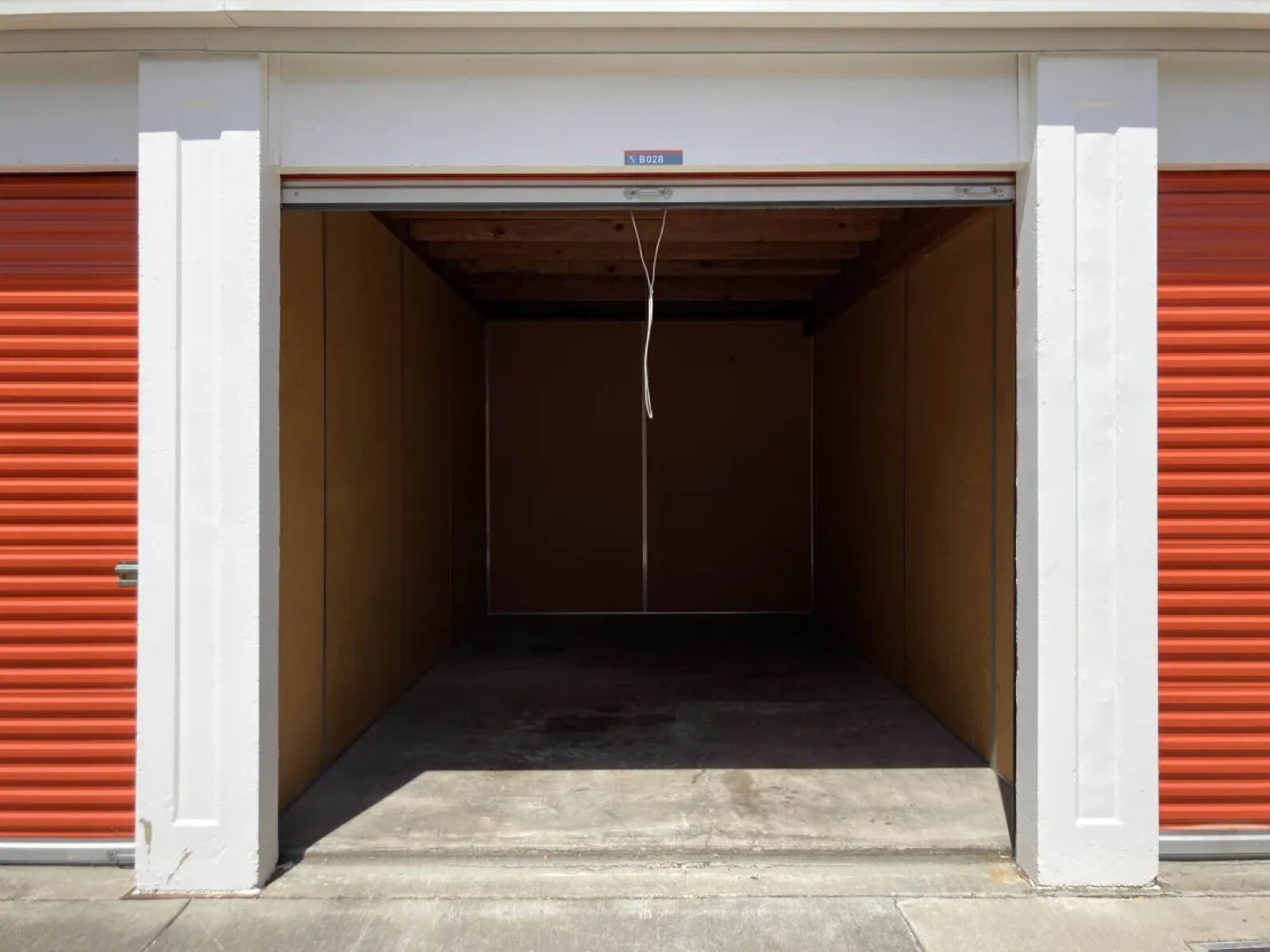
Self storage: your own locked unit that you load and access yourself. Charged by unit size, usually by the week or month.
Rough capacity: the contents of an average three bedroom house fill four to five containers, on the British Association of Removers' own figure.
Market benchmark: UK self storage turned over £1.3 billion across 67.5 million square feet in 2026, at £27.40 of revenue per square foot excluding VAT, with occupancy at 74.5%.
Storage enters a move for one of about four reasons: the chain will not complete on the same day, you are renting between properties, you are going away for work, or you are downsizing and the new place will not swallow everything. The reason matters, because it decides which of the two options is right and roughly nothing else does.
The two options, side by side
Containerised storage, the one people forget
The British Association of Removers describes containerised storage plainly: purpose-built wooden boxes, stackable and weather resistant, with a standard warehouse container holding 250 cubic feet at about five feet wide, seven feet deep and eight feet high. Your removal crew packs your belongings straight into the containers at your house, the containers go on the van, and the van goes to the warehouse.
The advantages are structural rather than marketing:
- Your goods are handled once. They are loaded at your door into the box they will sit in, rather than being carried into a van, out of a van and into a unit.
- One company, one point of contact. The mover who packed it is the mover who stores it and the mover who delivers it.
- It is almost always cheaper than the equivalent volume of self storage, on BAR's own account, because warehouse racking is a far more efficient use of a building than corridors and roller doors.
- Containers can be itemised, so you can ask for two of five back rather than all of them.
The disadvantage is the one that decides it for many people: customer access is minimal and always accompanied by staff. If you know you will need the good winter coats in November, containerised storage will annoy you.
Self storage, and what the premium buys
Self storage gives you a defined space, your own padlock and access during the site's opening hours. You do the loading, you do the carrying, and you decide what goes where.
Things worth checking before signing:
- Which floor. A ground floor unit with a roller door beside a loading bay is a different job from a third floor unit reached by a goods lift and a hundred metres of corridor.
- Access hours. Twenty four hour access is common but not universal, and "24 hour" sometimes means with a prior arrangement.
- Minimum term and notice. Most sites want a minimum period, and most want notice to leave. A move that completes early can still be paying for a fortnight of empty unit.
- Insurance. Nearly every operator requires cover and most sell their own. You can often use a home contents policy extension instead, but you have to produce the policy.
- VAT. Self storage is standard rated, so a headline weekly price may or may not include the 20%. Ask which it is before comparing two quotes.
- Introductory offers. A half price first eight weeks is real money, but check what the rate reverts to and whether the operator can raise it mid-term.
What it actually costs
Honest answer: nobody can quote you a national price, because self storage is priced like hotel rooms. The same unit costs more in Brighton than in a shed off the A27, more in January than in August, and more on the day you turn up than it did on the website.
What can be pinned down is the market benchmark. The SSA UK Annual Industry Report for 2026, produced with Cushman & Wakefield, puts the industry at £1.3 billion of turnover across 67.5 million square feet, with revenue per square foot at £27.40 excluding VAT, down 5.1% from £28.87 the year before, and occupancy at 74.5% overall, or 79.6% at mature stores.
That figure is revenue spread across all the space, not a price list. If you take it at face value and adjust for occupancy, the implied achieved rate on space that is actually let is around £36.80 per square foot a year, which is about £3.05 a square foot a month before VAT. On a 50 square foot unit, roughly the footprint of a small single garage, that lands near £150 a month before VAT. Treat it as a sanity check on a quote, not as a quote.
Two things follow from the report that are more useful than any average. Rates fell year on year, which means there is room to negotiate, particularly on a longer commitment. And a quarter of the industry's space is empty, which means an operator with a half-full building would rather discount than leave a unit dark.
Storage in transit, which is a different product
If your storage need is the gap between completions, ask specifically about storage in transit rather than long-term storage. It is designed for exactly that: goods stay containerised, the mover keeps them in the warehouse for the weeks between the two dates, and the second half of the move is already booked. Priced as part of the move, it is usually cheaper and much less work than renting a unit and hiring a van twice.
Get the quote in writing with the storage weeks itemised, because a chain that slips a fortnight is normal and you want to know the weekly rate in advance rather than in an invoice.
Insurance, and the thing movers do not cover
A removal firm's liability under standard trading conditions is limited, usually to a capped sum per item rather than the replacement value of your possessions. Storage cover is a separate line. Whichever route you take:
- Declare a realistic total value. Under-declaring to save a few pounds is the reason claims get reduced.
- List high value single items separately. Most policies have a per item cap.
- Check whether cover includes the loading and the transit, or only the time in store.
- Photograph everything as it is packed. It costs ten minutes and it is the only inventory you will have.
What you cannot store
Every operator and every remover publishes a prohibited list, and they are broadly the same: no food or anything perishable, no plants or animals, no petrol, gas bottles, paint, solvents or other flammables, no firearms or ammunition, nothing illegal, and usually no unregistered vehicles. Drain the lawnmower and the strimmer before they go in. Batteries, particularly lithium ones in tools and e-bikes, are increasingly refused too, so ask rather than assume.
Sussex practicalities
Two local points are worth planning around. First, loading. If you are moving from a terrace in central Brighton, Hove, Worthing or Lewes, the load out needs a suspended bay or a dispensation from the council, which takes days to arrange and cannot be done on the morning. Our local guides to removals in Hastings and St Leonards, Chichester and West Sussex and Horsham, Haywards Heath and Burgess Hill cover the parking rules in each.
Second, damp. Anything stored on the coast that is going to sit for six months wants to be inside a heated building rather than in an outdoor shipping container on a yard. Ask what the building is and whether it is temperature controlled, and put soft furnishings in sealed covers rather than bin bags, which trap condensation against the fabric.
Frequently Asked Questions
Is storage when moving house cheaper with a removal company or a self storage site?
Usually the removal company. Containerised storage is almost always cheaper than the equivalent volume of self storage, according to the British Association of Removers, because a warehouse stacks containers far more efficiently than a self storage building uses its floor. The trade off is that you cannot access the containers freely.
How much storage do I need for a three bedroom house?
Four to five standard containers, on BAR's figure, with a standard container holding 250 cubic feet. In self storage terms that is broadly a 100 to 150 square foot unit, though it depends heavily on how well it is packed and how much furniture dismantles.
How much does self storage cost in the UK?
There is no national price. The SSA UK Annual Industry Report 2026 puts industry revenue at £27.40 per square foot excluding VAT, down 5.1% on the year, with 74.5% occupancy. Adjusted for that occupancy, the implied rate on let space is roughly £3.05 per square foot a month before VAT, so a 50 square foot unit sits near £150 a month. Use it to sanity check a quote, then negotiate.
What is storage in transit?
Storage arranged as part of a move, where the mover keeps your goods containerised in their warehouse for the gap between completion dates and then delivers them into the new house. It is usually cheaper than renting a unit and much less handling, and it is the right product for a broken chain.
Do I need insurance for storage?
Effectively yes. Most operators require it and a remover's liability under standard trading conditions is capped rather than full replacement value. Either buy the operator's cover or extend your home contents policy, declare a realistic total, and list high value items separately.
Can I store a fridge, a mower or paint?
A fridge yes, if it is defrosted, dried and left with the door ajar. A mower yes, if the fuel is drained. Paint, petrol, gas bottles and other flammables no. Every operator publishes a prohibited list and it also covers food, plants and animals.
Sources
- British Association of Removers: Home Storage, for container dimensions, capacity and the containerised versus self storage comparison
- Cushman & Wakefield: UK Self Storage Annual Report 2026, for turnover, floorspace, occupancy and revenue per square foot
More from Move Sussex: what removals cost in Sussex and our downsizing guide.
Checked on 7 September 2026. Prices are indicative market benchmarks, not quotes; always confirm the rate, the minimum term, the notice period and whether VAT is included before you sign.