House Survey Types Explained: Which RICS Level Do You Need?
There are three house survey types in England, and they are not three grades of the same thing. RICS calls them Home Survey Level 1, Level 2 and Level 3, and the gap between them is not depth of detail so much as what the surveyor is allowed to tell you. A Level 1 will not diagnose a defect, will not price a repair, and will not test anything. Buy the wrong one on an old Sussex house and you have paid for a document that cannot answer the question you bought it to answer.
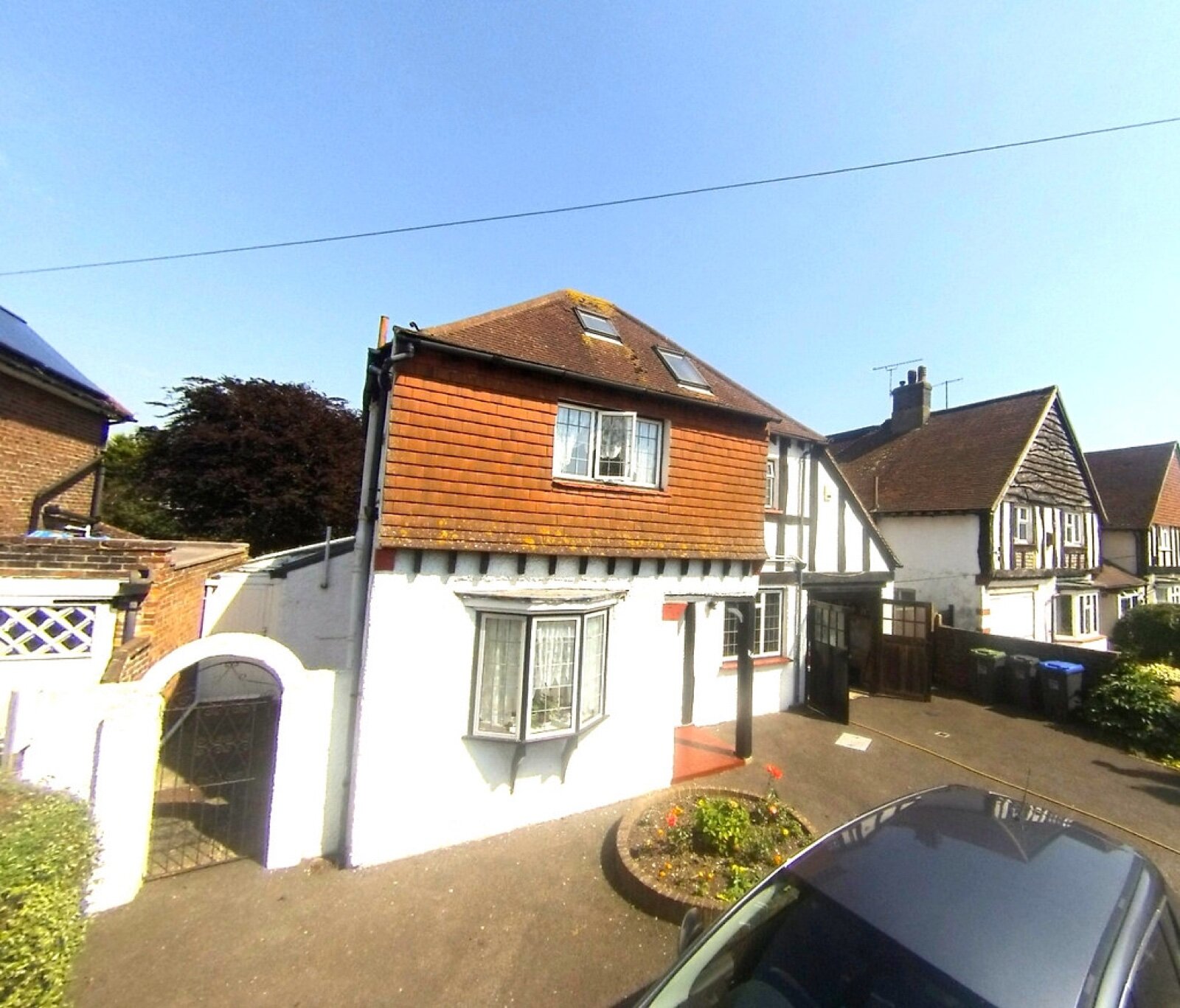
A tile-hung house in Worthing, the kind of older stock a Level 3 survey is written for. Photo: Property In Worthing by Jonathan Rolande (CC BY 2.0), via Flickr.
First: a mortgage valuation is not a survey
Your lender will arrange a valuation and may charge you for it. It is done for the lender, to confirm the property is adequate security for the loan. It is not a condition report, the surveyor is not acting for you, and it will not warn you about the things that cost money. Every year, buyers complete on a house believing the lender's valuer checked it. Nobody did.
The three levels, side by side
| Level 1 | Level 2 | Level 3 | |
|---|---|---|---|
| Condition of main elements | Yes | Yes | Yes |
| Diagnoses defects | No | Advice on defects | Yes, with remedial options |
| Advice on repairs and maintenance | No | Yes | Yes, including future maintenance |
| Roof space and drainage chambers | Limited | More extensive inspection | More extensive inspection |
| Concealed areas opened where safe | No | No | Yes |
| Reinstatement cost | No | Usually | Usually |
| Valuation | No | Optional add-on | By arrangement |
| Best for | Newer, conventional, good order | Standard house in reasonable condition | Older, altered, unusual or neglected |
Level 1: the one people regret
Level 1 assesses the general condition of the main elements of the property. No tests of the building fabric or the services are carried out. RICS states plainly that a Level 1 does not provide reinstatement costs, does not offer additional diagnosis of defects, and does not advise on remedying them.
The limits on services are the part worth reading twice. Only the visible parts of the available services can be inspected, and the surveyor carries out no specialist tests. The visual inspection cannot assess the efficiency or safety of the electrical, gas or other energy supply. It does not investigate plumbing, heating or drainage installations, or whether they meet current regulations, or the internal condition of any chimney, boiler or flue.
Level 1 has a place: a recent, conventional house that is visibly in good order and that you are not planning to alter. On anything older, it is a false economy.
Level 2: the default for most buyers
Level 2 includes everything in Level 1 and adds a more extensive inspection of the roof space and the drainage chambers, plus advice on defects that may affect the property and what maintenance or repairs may be required. A version with a valuation is available if you want a market figure and an insurance reinstatement cost alongside the condition report.
This is the right choice for the majority of moves: a house of reasonable age in reasonable condition, no obvious structural concerns, no plans to knock anything through. In Sussex that covers most of the post-war stock and a lot of the well-maintained inter-war housing across Worthing, Crawley, Haywards Heath and the Brighton suburbs.
Level 3: for old, altered or worrying
Level 3 is the most comprehensive report, previously known as the RICS Building Survey. It addresses the materials used in each part of the building, the defects and the remedial options, and issues of future maintenance. Concealed areas normally opened or used by the occupiers are inspected where it is safe to do so, and the report identifies risks, explains the nature of the problems and explains how you might resolve or reduce them.
Choose it when any of these apply: the property is Victorian or older; it is timber-framed, flint, tile-hung or thatched; it has been extended, converted or had a loft or basement done; it has been empty or neglected; there is visible cracking, damp or subsidence history; or you intend to alter it structurally after you move in.
Sussex has a lot of exactly that. Flint cottages on the Downs, Victorian terraces in Brighton, Hove and Worthing, Wealden timber framing, and a large stock of houses altered over decades without much paperwork. On any of those, the extra cost of a Level 3 over a Level 2 is trivial next to what a single missed defect costs.
Getting more out of it
- Talk to the surveyor before the inspection. Tell them what worries you and what you plan to do to the house. They can look specifically rather than generally.
- Ring them after you have read the report. The verbal answer to "how bad is this really" is usually the most valuable part of the whole exercise, and it is free.
- Follow the recommendations. If the report says get a drainage or electrical specialist in, that is the surveyor telling you they were not permitted to test it. Get the specialist.
- Price the work before you renegotiate. Quotes move sellers; survey adjectives do not.
Where the survey fits in the wider timetable is covered in our guide to the conveyancing process and how long conveyancing takes. For the legal costs alongside it, see conveyancing fees in Sussex.
Frequently asked questions
What are the three house survey types?
The RICS Home Survey Standard sets three levels. Level 1 reports on the general condition of the main elements. Level 2 adds a more extensive roof space and drainage chamber inspection plus advice on defects and the repairs needed, and comes with an optional valuation. Level 3, formerly the Building Survey, is the most detailed and covers materials, defects, remedial options and future maintenance.
Is a mortgage valuation the same as a survey?
No, and this is the most expensive misunderstanding in the process. A mortgage valuation is done for the lender, to confirm the property is worth enough to lend against. It is not a condition report, it is not commissioned for you, and it will not tell you the roof needs replacing. Buyers routinely discover this after completion.
What does a Level 1 survey not include?
A great deal. RICS is explicit that Level 1 does not provide reinstatement costs, does not diagnose defects and does not advise on remedying them. Only visible parts of the services are inspected, with no specialist tests, so it cannot assess whether electrical or gas installations are safe or efficient, and it does not investigate plumbing, heating or drainage, or the internal condition of a chimney, boiler or flue.
Which survey should I get for a Victorian house?
Level 3. Older Sussex stock, meaning Victorian and Edwardian terraces, flint cottages, tile-hung and timber-framed properties and anything extended or converted, is exactly what Level 3 was designed for, because it covers the materials used in each part of the building and sets out remedial options rather than simply flagging a concern.
Should I get a survey on a new-build?
A snagging survey usually serves better than a RICS home survey on a brand-new home under warranty. For a house of ten to thirty years old in good order, Level 2 is normally proportionate. The age and condition of the building should drive the choice, not the purchase price.
Can a survey get the price reduced?
It often does, but only if you use it properly. Get quotes for the specific repairs the surveyor identifies, then renegotiate against those figures rather than against the survey's general tone. A vague request for a reduction because the survey found problems is much easier for a seller to refuse than a builder's quote for a new roof covering.
Sources
- RICS, home surveys and the Home Survey Standard, including the scope and limits of each level: rics.org
- RICS, description of the RICS Home Survey Level 1, the service and its exclusions: rics.org
Survey scopes checked against RICS guidance on 24 August 2026. Fees vary by firm and property, so get two or three quotes. More moving guides at the Move Sussex homepage.