Home › Moving to Sussex › Moving to Eastbourne
Moving to Eastbourne: Areas, Schools, Trains and House Prices
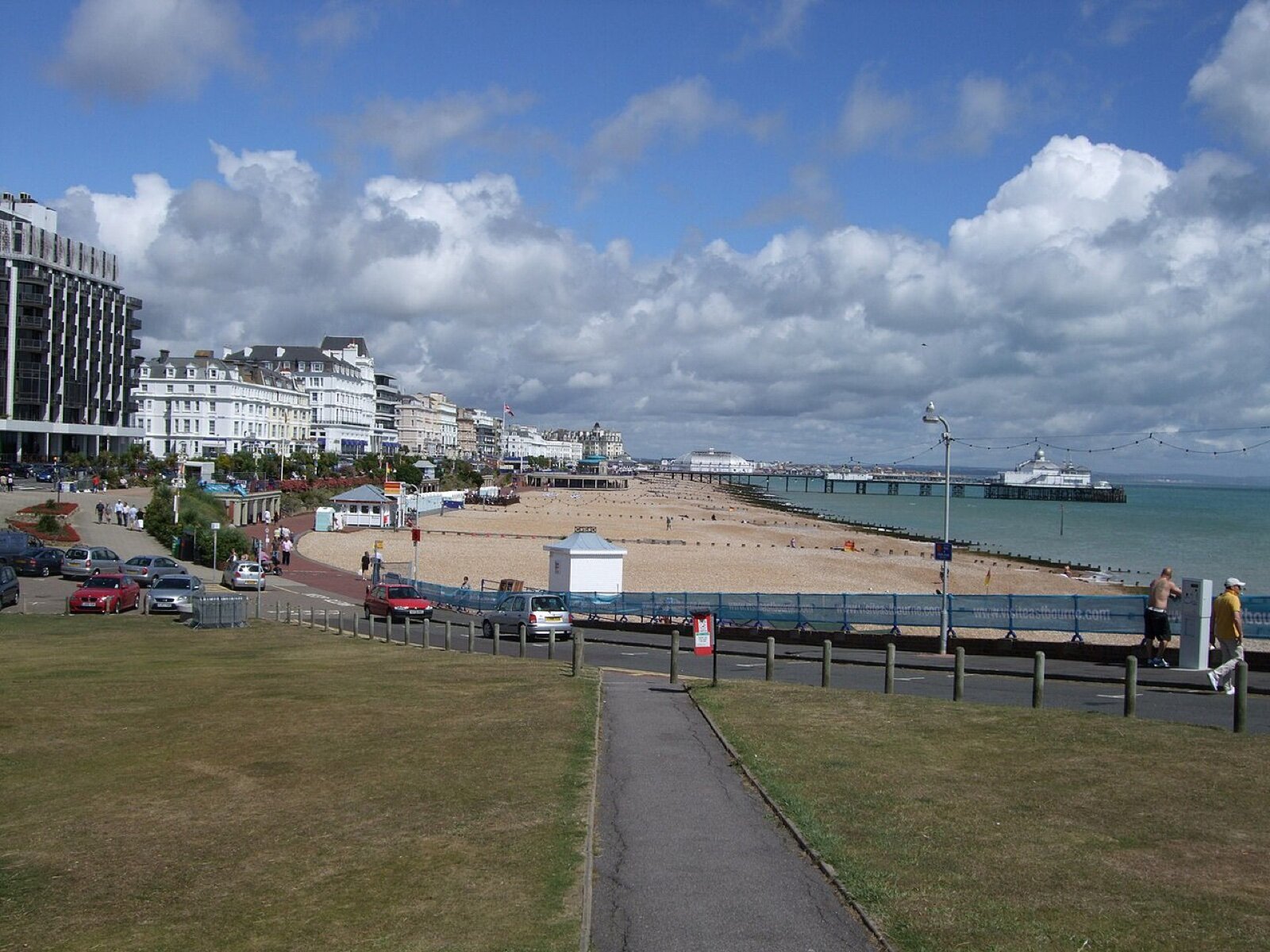
Moving to Eastbourne gets you a seafront town of about 101,700 people (2021 census) between Beachy Head and Pevensey Bay, with homes that cost well below the East Sussex average. The typical property in Eastbourne sold for £254,636 in July 2026, according to HM Land Registry, against £316,959 for East Sussex as a whole. Direct Southern trains reach London Victoria in around an hour and a half. This page covers what each type of home costs, the main areas, how school places work, and the commute.

Average price, Eastbourne: £254,636 in July 2026, down 1.6% on a year earlier (HM Land Registry UK House Price Index).
East Sussex average: £316,959 in the same month, so Eastbourne sits about 20% lower.
Train to London: direct Southern services to Victoria via Lewes and Gatwick Airport, around an hour and a half.
Councils: Eastbourne Borough Council (bins, planning, council tax) and East Sussex County Council (schools, roads, social care).
Eastbourne house prices by property type
Eastbourne is one of the more affordable places to buy on the Sussex coast. A flat averages under £175,000, and a terraced house under £285,000, which is less than many flats cost in Brighton. Prices dipped over the year to July 2026, driven mostly by flats, while semi-detached and terraced houses were flat or slightly up.
| Property type | Average price, July 2026 | Change on a year |
|---|---|---|
| Detached | £518,179 | -0.7% |
| Semi-detached | £354,506 | +0.3% |
| Terraced | £282,826 | 0.0% |
| Flat or maisonette | £174,992 | -3.8% |
| First-time buyer average | £217,644 | -1.5% |
| All property types | £254,636 | -1.6% |
Source: HM Land Registry UK House Price Index, Eastbourne.
The low flat average reflects the town's stock: a large share of homes near the seafront and town centre are flats in converted Victorian houses and former hotels. Before you buy one, ask about the lease length, service charge and any planned work to the building, because seafront buildings take a battering from salt and wind. For comparison further west, see our guide to moving to Brighton.
The areas: where to look
Meads
Meads, at the western end of the town under the Downs, has the largest Victorian and Edwardian houses, many now split into flats, and quiet tree-lined roads. It is close to Eastbourne College and the walk up to Beachy Head, and it is generally the most expensive part of town.
Town centre and seafront
Around Terminus Road, the Beacon shopping centre and the seafront, most homes are flats. You are close to the station, shops and the beach, but parking is tight and summer weekends are busy.
Old Town
Inland around St Mary's Church, Old Town is the original village, with older cottages and terraces as well as larger family houses up towards the Downs. It has its own small high street and a quieter feel than the seafront.
Upperton
Just north of the town centre, Upperton has substantial period houses and conversion flats within walking distance of the station, which makes it popular with commuters.
Sovereign Harbour
At the eastern end, Sovereign Harbour is built around a marina, with modern houses and flats, some with their own moorings. It is newer and more uniform than the rest of town, with a retail park nearby, but further from the station.
Hampden Park, Langney and the north
Hampden Park, with its own station on the line towards Lewes, and Langney to the east, have more terraced and semi-detached family homes at lower prices. To the north, Ratton and Willingdon are leafier, with larger semis and detached houses; Willingdon sits just across the boundary in Wealden district.
Eastbourne schools: how places are decided
East Sussex County Council runs admissions for state schools in Eastbourne. For community schools it uses catchment areas: children living inside a school's catchment get priority when it is oversubscribed. Many Eastbourne secondaries are academies or free schools that set their own oversubscription criteria, published on the council's admissions pages, so read each school's rules rather than assuming the nearest school will take your child.
State secondaries in and around the town include Ratton School, Willingdon Community School, Cavendish School, The Eastbourne Academy, Gildredge House, St Catherine's College and Causeway School. Eastbourne College and Moira House are independent schools in the town.
For children starting secondary school in September 2027, the closing date for applications to East Sussex is 31 October 2026. If you are moving after that date, apply as soon as you have a confirmed address, but expect popular schools to be full. Our sister site explains how catchment areas work and the national application deadlines.
Trains and the London commute
Eastbourne is at the end of a branch of the East Coastway line, and Southern is the only train operator. Direct trains to London Victoria run via Polegate, Lewes, Haywards Heath and Gatwick Airport, and take around an hour and a half, which is longer than the distance suggests. There is no Thameslink service, so for the City you change at Haywards Heath or Gatwick or travel via Victoria. Trains also run east to Bexhill, Hastings and Ashford, and west along the coast to Brighton.
Hampden Park and Polegate stations serve the north of the town and save the drive into the centre. Price the season ticket for the exact journey you will make before committing to an address, because the daily commute to London is a big cost from here. Many people who move to Eastbourne work locally, in Brighton, or from home most of the week.
Getting about locally
The town is flat along the seafront and from the station to the harbour, which makes cycling practical; the Downs rise steeply to the west. Stagecoach runs the main local bus routes, including along the seafront and out to Sovereign Harbour and Hampden Park. By car, the A22 runs north towards London and the A27 runs west to Lewes and Brighton and east to Pevensey and Bexhill.
Planning the move
If you are moving into a flat on a busy road near the seafront, check whether you will need a parking suspension for the removal van, and book it early in summer. For local firms, prices and what to ask, see our page on removals in Eastbourne, and for the bigger picture our moving to Sussex guide.
Frequently Asked Questions
What is the average house price in Eastbourne?
£254,636 in July 2026, according to the HM Land Registry UK House Price Index, down 1.6% on a year earlier. A flat averaged £174,992 and a semi-detached house £354,506.
Is Eastbourne cheaper than Brighton?
Yes, by a wide margin. In July 2026 the average Eastbourne home cost £254,636, against £408,948 in Brighton and Hove.
How long is the train from Eastbourne to London?
Direct Southern trains to London Victoria take around an hour and a half, running via Lewes, Haywards Heath and Gatwick Airport.
Which council runs schools in Eastbourne?
East Sussex County Council handles school admissions. Community schools use catchment areas; academies and free schools set their own criteria. The deadline for September 2027 secondary places is 31 October 2026.
What are the nicest areas of Eastbourne?
Meads and Old Town are the most sought after for period houses; Upperton suits commuters; Sovereign Harbour offers modern homes by the marina; Hampden Park and Langney are more affordable for families.