Home › Moving to Sussex › Moving to Crawley
Moving to Crawley: Neighbourhoods, Schools, Trains and House Prices
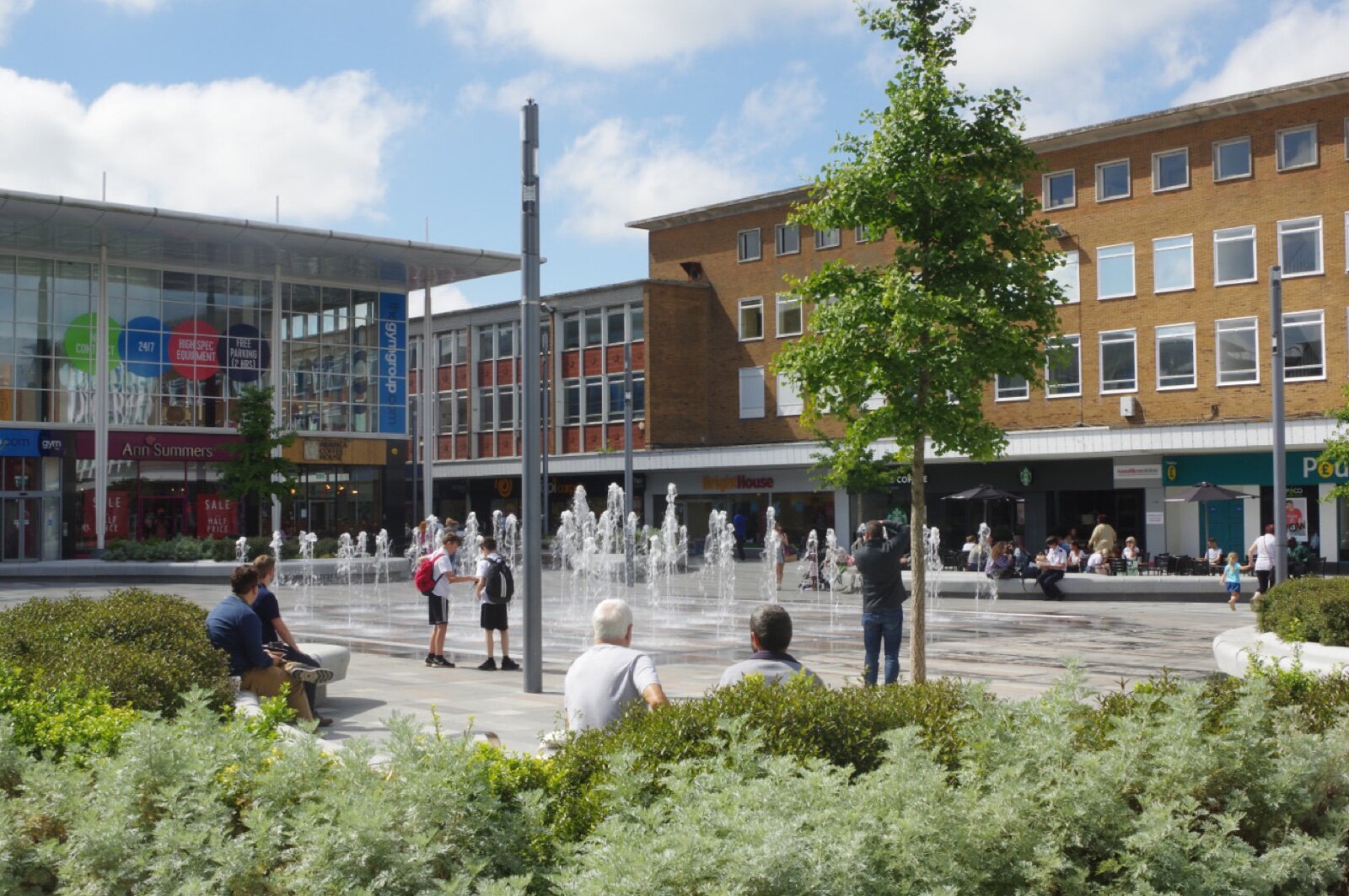
Moving to Crawley gets you the cheapest homes of the main Gatwick Diamond towns, trains from Three Bridges to London Victoria in about 36 minutes, and an airport on the doorstep. Crawley is a new town of 118,493 people (2021 census), built from 1947 around a set of self-contained neighbourhoods, each with its own shops and schools. HM Land Registry put the average home at £332,384 in July 2026, about £41,000 below the West Sussex average. This page covers what each type of home costs, how the neighbourhoods differ, how school places work and the commute.
.jpg)
Average price, Crawley: £332,384 in July 2026, up 2.3% on a year earlier (HM Land Registry UK House Price Index).
West Sussex average: £373,740 in the same month, so Crawley is about 11% cheaper.
Train to London: fastest direct trains from Three Bridges to Victoria in about 36 minutes; Thameslink to London Bridge, Farringdon and St Pancras.
Councils: Crawley Borough Council (bins, housing, planning, council tax) and West Sussex County Council (schools, roads, social care).
Crawley house prices by property type
Crawley is a borough in its own right, so the Land Registry publishes figures for the town itself rather than a wider district. Flats and terraces make up much of the housing stock in the original new town neighbourhoods; detached houses are fewer and concentrated in the newer estates, which is why the detached average sits so far above the rest.
| Property type | Average price, July 2026 (Crawley) | West Sussex average |
|---|---|---|
| Detached | £666,225 | £664,550 |
| Semi-detached | £426,039 | £421,312 |
| Terraced | £342,420 | £334,983 |
| Flat or maisonette | £210,537 | £196,994 |
| First-time buyer average | £297,955 | £294,029 |
| All property types | £332,384 | £373,740 |
Source: HM Land Registry UK House Price Index, Crawley.
Type for type, Crawley prices are close to the county average. The overall figure is lower because so much of what sells is flats and terraces. For a pricier commuter town nearby, compare moving to Horsham or moving to Haywards Heath.
The neighbourhoods: where to look
Three Bridges and Pound Hill
Three Bridges grew up around the junction station on the Brighton Main Line, which has the town's fastest trains to London. It has Victorian and inter-war streets close to the station plus newer flats. Pound Hill, to the east, is one of the larger neighbourhoods, with a mix of 1960s to 1980s family houses and easy access to the M23.
Maidenbower and Furnace Green
Maidenbower, in the south-east, was built mainly in the late 1980s and 1990s and is popular with families for its larger modern houses and its own schools and shops. Furnace Green sits between Three Bridges and Tilgate, close to Tilgate Park, the town's big green space with lakes, woodland walks and a nature centre.
Ifield, West Green and Gossops Green
Ifield is the oldest part of Crawley, with a medieval church and a village green that predate the new town, and it has a station on the Arun Valley line. West Green and Gossops Green, between Ifield and the town centre, have new town houses at some of the most affordable prices in the borough.
Southgate, Tilgate, Broadfield and Bewbush
These southern neighbourhoods are within reach of the A23 and M23 junction 11. Southgate is the closest to the town centre. Broadfield and Bewbush were among the later new town neighbourhoods, with a lot of terraced and semi-detached housing and some of the lowest prices in Crawley.
Forge Wood
Forge Wood, in the north-east near the airport, is Crawley's newest neighbourhood, built over the last decade. It suits buyers who want a new-build with a warranty and modern energy efficiency, but it is closer to the runway than most of the town.
Gatwick and the second runway
Gatwick Airport is inside the borough and is the biggest local employer, directly and through its supply chain. On 21 September 2025 the Transport Secretary granted development consent for the airport's northern runway to come into routine use alongside the main runway, a change expected to let it handle around 80 million passengers a year. Crawley Borough Council's page on the project sets out the timeline. If aircraft noise matters to you, check where a street sits relative to the flight paths before you offer; the northern neighbourhoods, Langley Green, Forge Wood and parts of Pound Hill, are the most affected.
Crawley schools: how places are decided
West Sussex County Council runs admissions for state schools. Community schools give priority to children living inside their catchment area when they are oversubscribed, while academies and church schools set their own rules. The state secondaries in the town include Hazelwick School, Oriel High School, Thomas Bennett Community College, Ifield Community College, Holy Trinity Church of England Secondary School and St Wilfrid's Catholic School.
For children starting secondary school in September 2027, the closing date for applications in West Sussex is 31 October 2026. If you are moving after that, apply as soon as you have a confirmed address. Our sister site explains how catchment areas work and the in-year admissions process when you move house.
Trains, roads and the London commute
Three Bridges is the station most commuters use. Southern lists the fastest direct trains to London Victoria at about 36 minutes, and Thameslink runs through to London Bridge, Farringdon and St Pancras International. Crawley station in the town centre and Ifield are on the Arun Valley line, with fewer, slower London trains. Gatwick Airport station, a few minutes north, has the Gatwick Express to Victoria.
By road, the M23 runs along the east of the town to the M25, and the A23 continues south to Brighton. Brighton is about 40 minutes by car outside peak times.
Healthcare: Crawley Hospital has an urgent treatment centre; the nearest full A&E is East Surrey Hospital in Redhill.
Moving day
Most new town neighbourhoods have on-street or parking-court parking, which can make it hard to get a removal lorry close to the door. Check whether you need a parking suspension, and tell the removal company about narrow access. For local firms and typical prices see removals in Crawley, for estate agents see estate agents in Crawley, and for the bigger picture our guide to moving to Sussex.
Frequently Asked Questions
How much does a house cost in Crawley?
HM Land Registry put the average Crawley home at £332,384 in July 2026, up 2.3% on a year earlier: £426,039 for a semi-detached house, £342,420 for a terrace and £210,537 for a flat. The West Sussex average in the same month was £373,740.
How long is the train from Crawley to London?
From Three Bridges, the fastest direct trains to London Victoria take about 36 minutes, according to Southern, and Thameslink runs direct to London Bridge and Farringdon. Trains from Crawley station itself, on the Arun Valley line, are slower and less frequent.
What are the best areas to live in Crawley?
It depends on what you need. Three Bridges and Pound Hill suit London commuters, Maidenbower and Furnace Green are popular with families, Ifield has the oldest village core, and Forge Wood is the newest neighbourhood with modern homes.
Is Crawley under the Gatwick flight path?
Gatwick sits inside the borough, so parts of Crawley, especially the northern neighbourhoods, hear aircraft. Consent for routine use of the airport's northern runway was granted on 21 September 2025, so check the noise contours for any street you are considering.
Which council runs Crawley?
Crawley Borough Council handles bins, housing, planning and council tax. West Sussex County Council runs schools, roads and social care.
When do I apply for a secondary school place in Crawley?
For September 2027 entry, apply to West Sussex County Council by 31 October 2026. If you move after that date, apply as soon as you have a confirmed address in the county.
Sources: HM Land Registry UK House Price Index (July 2026); ONS Census 2021; Southern journey planner; Crawley Borough Council. Back to the Move Sussex homepage.