Home › Moving to Sussex › Moving to Brighton
Moving to Brighton: Areas, Schools, Trains and House Prices
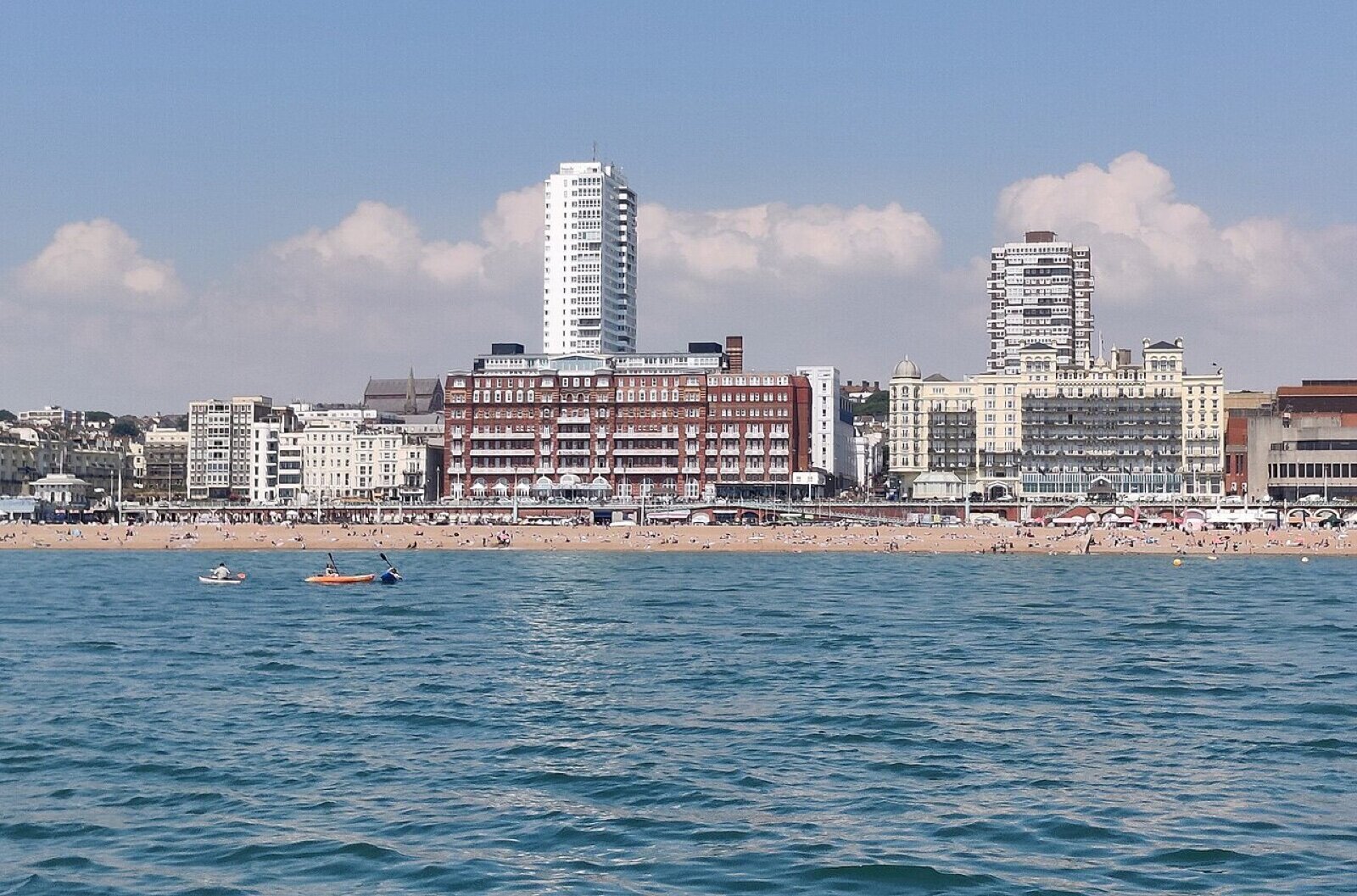
Moving to Brighton means moving to a city of about 280,000 people squeezed between the sea and the South Downs, with Hove running seamlessly into it to the west. Homes cost more than the South East average: the typical property in Brighton and Hove sold for £408,948 in July 2026, according to HM Land Registry, against £380,878 for the region. The fastest trains reach London Victoria in about an hour. This page covers what each type of home costs, the main areas, how school places are decided (Brighton is unusual) and the commute.

Average price, Brighton and Hove: £408,948 in July 2026, down 1.1% on a year earlier (HM Land Registry UK House Price Index).
South East average: £380,878 in the same month, so Brighton and Hove sits about 7% higher.
Train to London: about an hour to Victoria on the fastest services; around 68 direct trains a day to Victoria, plus Thameslink to London Bridge, Farringdon and St Pancras.
Council: Brighton & Hove City Council, a unitary authority, runs everything from bins and parking to school admissions.
Brighton house prices by property type
The Land Registry index covers the whole city of Brighton and Hove. The striking thing is how expensive houses are compared with flats: a terraced house costs on average more than £475,000, while a flat averages under £300,000. That gap reflects the city's housing stock, which is dominated by flats carved out of Regency and Victorian terraces near the sea, while family houses with gardens are scarcer and sought after.
| Property type | Average price, July 2026 | Change on a year |
|---|---|---|
| Detached | £858,475 | +0.3% |
| Semi-detached | £549,795 | +0.8% |
| Terraced | £475,728 | +0.4% |
| Flat or maisonette | £295,683 | -3.1% |
| First-time buyer average | £343,929 | -1.3% |
| All property types | £408,948 | -1.1% |
Source: HM Land Registry UK House Price Index, Brighton and Hove.
Houses held their value over the year while flats fell by 3.1%, which drags the overall average down. If you are buying a flat, that softness is useful leverage; if you are selling a flat to buy a house, the gap you need to bridge has widened. For a cheaper stretch of the same coast, compare our guide to moving to Worthing.
The areas: where to look
Kemptown
East of the Palace Pier, Kemptown runs from grand Regency squares near the sea to small terraced streets climbing the hill. St James's Street is its high street. Most homes are flats in converted houses, and on-street parking is controlled and tight. It is lively, a short bus ride from the centre and close to the Royal Sussex County Hospital.
Hanover and Elm Grove
Steep streets of small Victorian terraces north-east of the centre, with corner pubs and a strong community feel. Houses here are among the more affordable terraces within walking distance of the station, but the hills are genuinely steep and parking is a permit zone.
Preston Park and Fiveways
North of the centre, around Preston Park and the Fiveways junction, are larger Victorian and Edwardian family houses on wider streets. Preston Park has its own station on the main line to London, which makes this one of the most popular areas for commuting families, and prices reflect it.
Hove
Hove has a calmer feel than central Brighton. Brunswick Town and the seafront squares have Regency flats; the Avenues, north of Church Road, have big Victorian and Edwardian houses that are among the most expensive in the city. Hove and Aldrington stations are on the coastway line, with connections to London via Brighton or the direct services from Hove.
Patcham, Withdean and the north
At the top of the city, on the London Road towards the Downs, Patcham and Withdean are mostly interwar and post-war semis and detached houses with gardens, a quieter suburban option with quick access to the A23.
Rottingdean and the east
East along the cliffs, Rottingdean is a village with its own green, windmill and high street, while Saltdean and Ovingdean are mainly bungalows and family homes. There is no railway; buses run along the coast road into the centre.
Portslade
The western edge of the city has more terraced and semi-detached houses at prices below Hove proper, with Portslade and Fishersgate stations on the coast line.
Brighton schools: catchments and random allocation
Brighton and Hove does school places differently from most of England. For its community secondary schools, the council uses catchment areas, and where a school is oversubscribed it breaks ties within each priority group by random allocation rather than by distance from home. Living closer to the school gate does not give you an edge inside a catchment area, and some catchment areas contain more than one school, so you may not be able to predict which of two schools your child will get.
The council's admission arrangements for 2027/28 entry list the oversubscription priorities in this order, after children whose EHC plan names the school:
- Looked after and previously looked after children.
- Compelling medical or other exceptional reasons.
- A sibling at the school.
- Children in the catchment area who are eligible for free school meals, up to the city average.
- Other children eligible for free school meals, up to the city average.
- Children from outside the catchment but inside the catchment of BACA, PACA, Patcham or Longhill, up to 5%.
- Other children living in the catchment area.
- Everyone else.
Cardinal Newman Catholic School, King's School, Brighton Aldridge Community Academy (BACA) and Portslade Aldridge Community Academy (PACA) set their own criteria, so read each one separately. The council's 2027/28 admission arrangements include the catchment map.
Before you buy or rent, check which catchment area the address falls in, not just which school is nearest. For children starting secondary school in September 2027 the closing date for applications is 31 October 2026. Our sister site explains how catchment areas work and the national application deadlines.
Trains and the London commute
Brighton is on the Brighton Main Line. Southern and Gatwick Express run to London Victoria; the fastest trains take about an hour, though Trainline's route data puts the average journey at 1 hour 22 minutes because many services stop more often. Thameslink trains run through the city instead, to London Bridge, Blackfriars, Farringdon and St Pancras, which suits anyone working in the City or near King's Cross. Gatwick Airport is around half an hour away on the same line.
Your station matters. Preston Park, a few minutes north of Brighton station, is served by Thameslink and saves a trip into the centre for people living in the north of the city. Hove has some direct trains to Victoria that run via Preston Park without calling at Brighton; from Aldrington and Portslade most London journeys change at Hove or Brighton. Season tickets are expensive, so price the exact journey and the hours you will actually travel before committing to an address.
Getting about locally
Brighton & Hove Buses runs a dense network across the city, and many residents do not own a car. Much of the city centre and the inner suburbs are in controlled parking zones, where a residents' permit is needed and waiting lists can apply in some zones. If you need to park, check the zone and permit rules for the exact street before you commit. The A23 and A27 link the city to the M23 and along the coast.
Practical points before you move
- Leasehold flats: many flats are in converted period houses with shared freeholds or long leases. Ask about service charges, the condition of the roof and the building's planned works, which in seafront buildings can be costly.
- Hills: a map hides how steep parts of Hanover, Kemptown and Hove's northern streets are. Walk the route to the station before you buy.
- Removals: narrow streets and permit parking mean a removal van may need a parking suspension. Our Brighton and Hove removals guide covers how to arrange one and what local moves cost.
Frequently Asked Questions
How much does a house cost in Brighton?
The average for all property types in Brighton and Hove was £408,948 in July 2026. A terraced house averaged £475,728, a semi £549,795 and a detached house £858,475, while flats averaged £295,683 (HM Land Registry).
How long is the train from Brighton to London?
The fastest trains to London Victoria take about an hour. Thameslink also runs direct to London Bridge, Farringdon and St Pancras. Average journey times are longer because many services make extra stops.
How do school catchment areas work in Brighton?
Community secondary schools use catchment areas, and ties within each priority group are broken by random allocation rather than distance. Some catchment areas contain two schools. Academies and faith schools such as BACA, PACA, Cardinal Newman and King's set their own criteria.
What is the best area of Brighton for families?
Families often look at Preston Park and Fiveways for larger period houses near a station, Hove's Avenues for bigger houses close to the sea, and Patcham, Withdean or Rottingdean for more space and gardens further out. Check the school catchment for any address first.
Is Brighton more expensive than the rest of Sussex?
Yes, on average. Brighton and Hove's July 2026 average of £408,948 is about 7% above the South East figure of £380,878 and well above Worthing, the next large town along the coast.