Moving to London From Sussex, or Sussex to London
Moving London to Sussex, or Sussex to London, is the busiest relocation route on the south coast, and the two directions are not mirror images. Going south you are buying space and paying for it in commuting. Going north you are buying access and paying for it in price per square foot: on the June 2026 figures the average London home cost £289,000 more than the average Brighton and Hove one. The practical job, though, comes down to the same three things both ways: the money, the train, and where the van is allowed to stand.
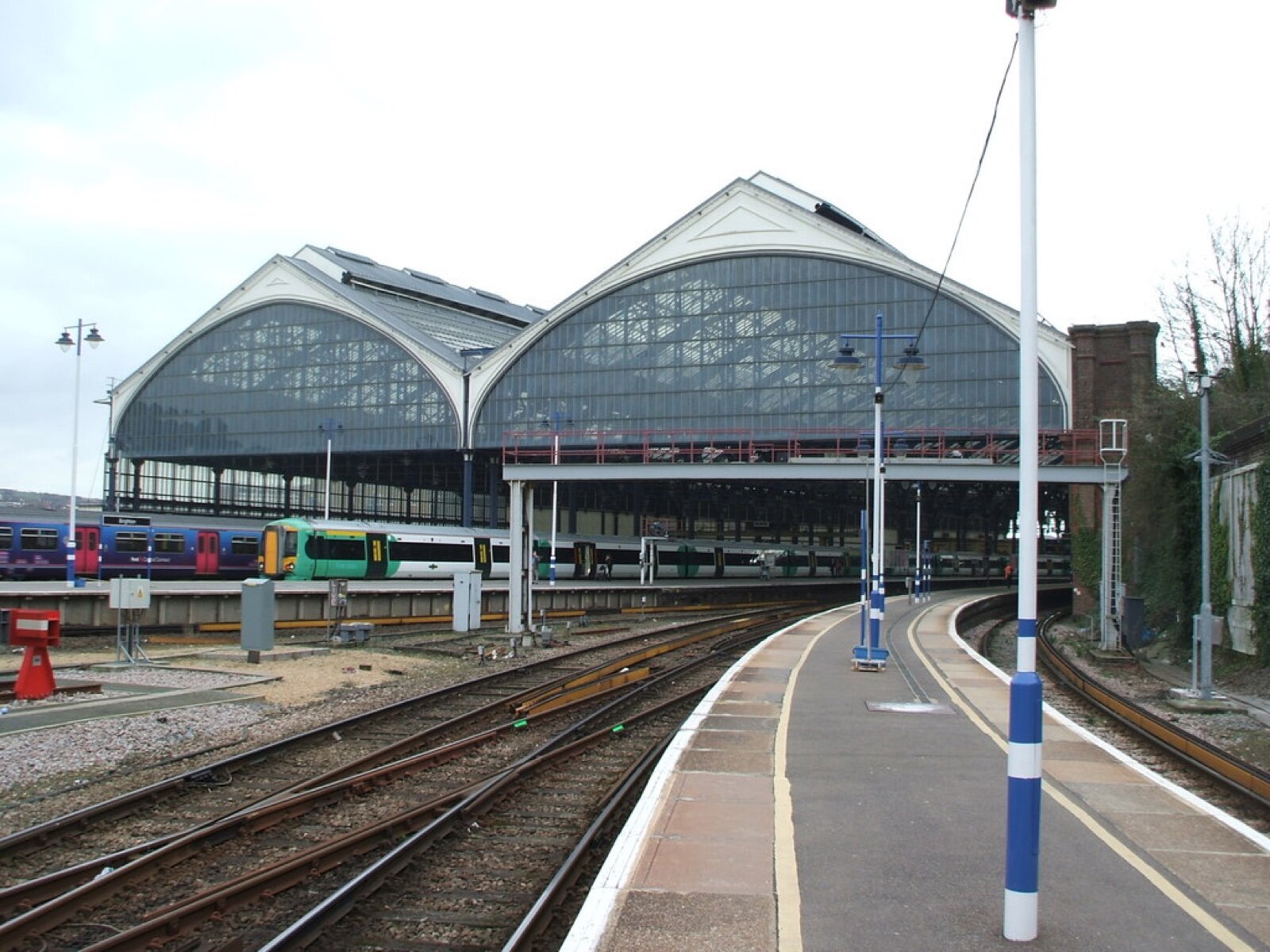
Brighton station, the start of most Sussex to London commutes. Photo: Brighton railway station by Nigel Thompson (CC BY-SA 2.0), via Geograph and Wikimedia Commons.
The price gap, on current figures
These are the averages from the UK House Price Index for June 2026, the most recent month published by the Office for National Statistics and HM Land Registry when this page was written.
Two details matter more than the headline. First, the gap is biggest on flats, which is the segment most people moving out of London are selling: £296,000 in Brighton and Hove and £217,000 in Mid Sussex against a London average that is far higher. Second, the gap is closing, not widening. London prices fell 2.5 per cent in the twelve months to June 2026, the tenth consecutive month of annual falls, while Brighton and Hove was flat and Crawley rose 4.5 per cent. If you are selling in London to buy in Sussex, that trade has been getting slightly worse, not better.
Our guides to stamp duty when moving home and conveyancing fees in Sussex cover the transaction costs on top of the price.
The commute, honestly
Most people moving south are buying a train season ticket, so price the ticket before you price the house.
| Annual season, Brighton to London | Price | Underground included? |
|---|---|---|
| London Thameslink only | £5,204 | No |
| With Travelcard, Zones 1 to 6 | £5,680 | Yes |
| London Terminals with Travelcard | £7,260 | Yes |
Those were the prices listed on Trainline in September 2026. The reason to fix them now is that regulated fares in England, which include standard season tickets, have been frozen for the first time in 30 years and stay at the same price until March 2027. That is a rare year in which the commute is not getting more expensive.
Journey time from Brighton is about an hour and a half on average to London Victoria, with roughly 54 direct trains a day, and the fast services are considerably quicker. Haywards Heath, Burgess Hill and Three Bridges are all shorter runs, which is exactly why mid-Sussex prices sit above the coast. If you are choosing a town by the timetable rather than the postcard, the mid-Sussex line is the compromise most commuters land on.
What the move itself costs
Brighton to central London is about 55 miles and a straightforward day's work for a removal crew. Firms price crew hours and volume, not mileage, so a Sussex to London job usually sits in the same bands as a local Sussex move with an extra half day added:
- Studio or one-bed: £300 to £600 locally, more once London access is priced in.
- Two-bed: £400 to £900.
- Three-bed: £600 to £1,400.
- Four-bed and up: £900 to £2,000 and beyond.
Our Sussex removal costs guide explains how each band is built, and international removals from Sussex covers the moves where part-loads and shipping change the pricing entirely.
What pushes a London job to the top of its band is never the drive. It is a third-floor flat with no lift, a shared entrance hall, a narrow stairwell, a long carry from wherever the van can legally stop, and a completion time that slips past four in the afternoon.
The London parking rule that decides your moving day
This is the single item worth sorting before you agree a date. Most inner London streets are inside a controlled parking zone, and you cannot simply park a Luton van outside for six hours. You apply to the borough for a bay suspension or a dispensation, usually several working days in advance, and every borough sets its own charge, its own notice period and its own online form. There is no London-wide scheme.
Three practical points:
- Apply early and for the widest window you can. Completion dates move. Re-applying costs more than over-booking the slot.
- Ask who is doing it. Some removal firms arrange the suspension as part of the job and some leave it entirely with you. Get that in writing in the quote.
- Check the charges. If the van enters the central zone during charging hours the Congestion Charge is £18 a day paid on the day or in advance, applying 7am to 6pm on weekdays and noon to 6pm at weekends and bank holidays. Vans and lorries must also meet the ULEZ or Low Emission Zone standards.
Coming the other way, Sussex is easier but not free. Brighton, Hove, Worthing and Lewes all have controlled parking zones with their own suspension charges and notice periods. Our Brighton and Hove removals guide and Worthing removals guide give the local rules.
The things people forget on this route
- Council tax overlap. You will be liable at both addresses for a few days. Tell both councils the exact dates rather than waiting for a bill. Our guide to council tax when moving house covers the discounts on an empty property.
- Schools. Moving into Sussex mid-year means an in-year application, not the normal admissions round, and popular catchments fill. Start before you exchange.
- Storage between completions. London and Sussex chains rarely complete on the same day. Our guide to storage when moving house explains storage in transit.
- Post. Redirect from the day you leave, not the day you arrive. See Royal Mail redirection.
- Parking at the new house. If you are moving into a Sussex CPZ, apply for the resident permit before moving day so the car is legal from the first night.
Which direction suits you
The honest summary is that Sussex buys you roughly 40 per cent more house and costs you between £5,200 and £7,300 a year if one of you commutes daily. Two or three days a week in the office changes that arithmetic completely, which is why the mid-Sussex towns have held their prices while London has fallen for ten straight months. Going the other way, from Sussex into London, you are trading space for time, and the practical advice is the same one every London mover gets: the flat is not the problem, the stairs and the parking are.
More on settling in either direction: moving to Sussex, the moving day plan, and the Move Sussex homepage.
Frequently asked questions
How much cheaper is Sussex than London?
On the June 2026 UK House Price Index the average home in London was £697,000 against £408,000 in Brighton and Hove, £426,000 in Mid Sussex and £338,000 in Crawley. The gap is widest on flats: £296,000 in Brighton and Hove and £217,000 in Mid Sussex. London prices fell 2.5 per cent in the year to June 2026, the tenth month of annual falls in a row, so the gap is narrowing rather than widening.
How much does a removal from Sussex to London cost?
It is usually priced as a long day rather than a long-distance job, because Brighton to central London is about 55 miles. Expect the same bands as a local Sussex move with an extra half day of crew time, so roughly £600 to £1,400 for a three-bed and £900 to £2,000 and up for four bedrooms or more. Access at the London end, parking and stairs move the number more than the mileage does.
How long is the train from Brighton to London?
Direct trains run from Brighton to London Victoria, London Bridge and St Pancras, and the average journey is about an hour and a half, with the fastest well under that. There are around 54 trains a day on the Victoria route alone. Haywards Heath, Burgess Hill and Three Bridges are all quicker again, which is why the mid-Sussex commuter belt prices above the coast.
What does a Brighton to London season ticket cost?
Trainline listed an annual Brighton to London season at £5,204 for the cheapest Thameslink-only version, £5,680 with a Zones 1 to 6 Travelcard, and £7,260 for London Terminals with a Travelcard, checked in September 2026. Regulated fares in England, which include standard season tickets, have been frozen for the first time in 30 years and hold at the same price until March 2027.
Do I need a parking permit for a removal van in London?
Almost always. Most inner London streets sit in a controlled parking zone, and you apply to the borough for a bay suspension or a dispensation, typically several working days ahead. Charges and notice periods are set by each borough, not centrally, so check the specific council and book it before you confirm the date with the removal firm.
Does a removal van pay the Congestion Charge?
If it enters the central London zone during charging hours, yes. The Congestion Charge is £18 a day paid on the day or in advance, and applies 7am to 6pm Monday to Friday and noon to 6pm at weekends and on bank holidays. Vans and lorries also have to meet the emissions standards for the ULEZ or the Low Emission Zone. Ask whether your quote includes these or adds them afterwards.
Sources
- UK House Price Index, England, June 2026, for the regional and local authority averages
- Transport for London: Congestion Charge, for the daily rate and charging hours
House prices are the provisional June 2026 UK House Price Index figures. Season ticket prices were checked on Trainline in September 2026 and vary by ticket type. Borough parking charges change; confirm with the council before you book the van. More moving guides at the Move Sussex homepage.